
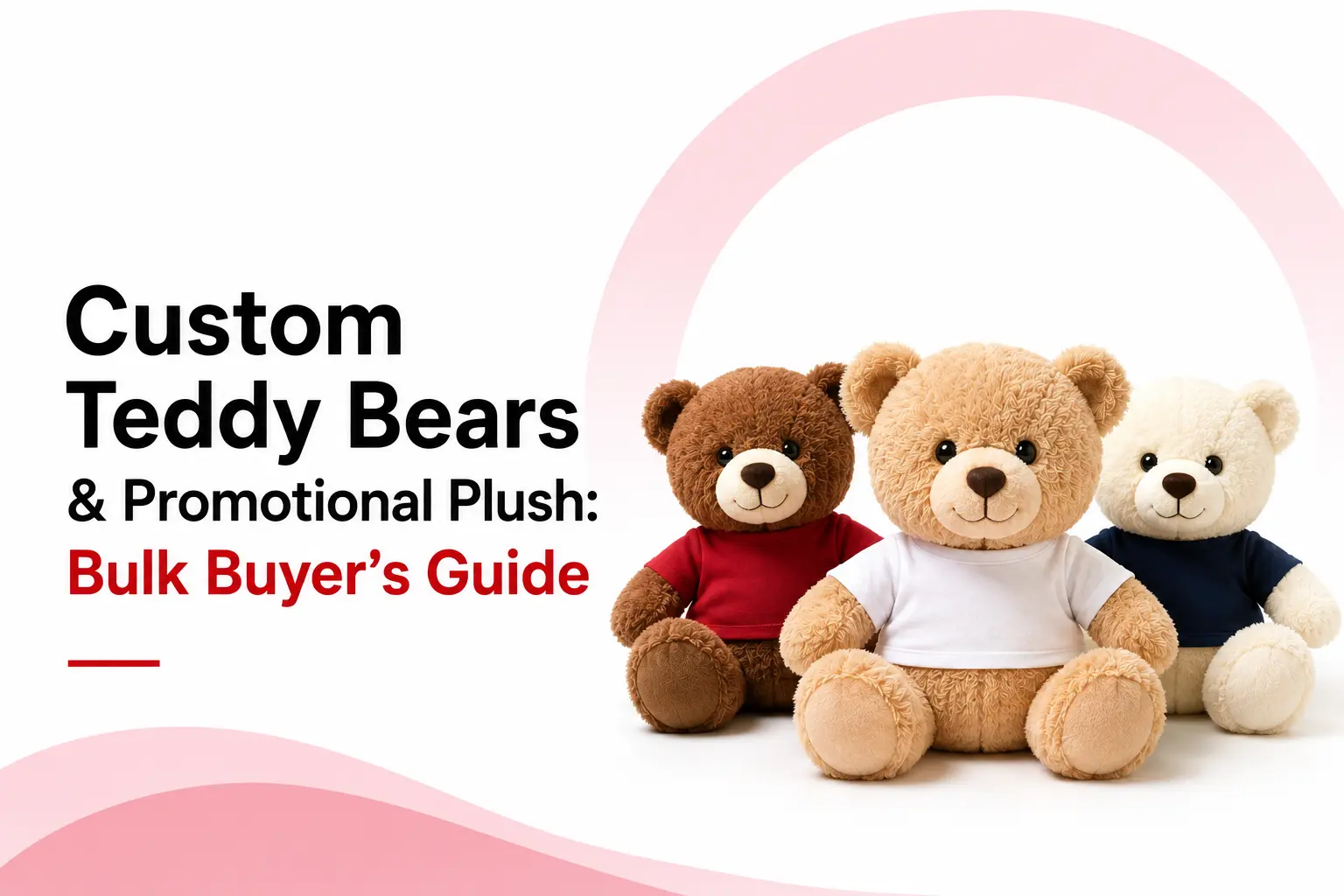
Promotional plush is a soft toy made to represent a brand, campaign, or character, ordered in bulk as branded merchandise, a giveaway, or a retail product. A custom teddy bear is the most familiar example, but the category is much wider: animal plush, character plush, mascots, capybara-style figures, and small clip-on plush key tags all fall under it. Businesses use these products because a plush toy tends to get kept rather than thrown away, which gives a brand far longer shelf life than a printed flyer or a pen. Sourcing them well comes down to matching the product to its purpose, then briefing a manufacturer clearly.
This guide covers how to plan, customise, and bulk-order promotional plush, using teddy bears as a running example.
What promotional plush products are
Promotional plush is custom-made soft merchandise that carries a brand or promotes a campaign. Unlike stock toys, these are produced to your specification, whether that means adding a logo to a classic teddy bear or commissioning an original character from scratch. A fabricante de brinquedos de pelúcia personalizados can build either, and the right approach depends on your budget, timeline, and how distinctive you want the result to be.
Common business uses
- Corporate gifts for clients, staff, or partners.
- Event and conference giveaways that people actually take home.
- Retail merchandise tied to a brand, film, game, or mascot.
- Marketing campaigns and product launches.
- Loyalty and collectible programs, including series and blind-box style releases.
- Charity and cause merchandise, where a plush mascot builds emotional connection.
The intended use should drive every later decision, from size to packaging.
Custom shapes, characters, and branding
Teddy bears remain popular because they are universally recognised and easy to brand, but promotional plush is not limited to bears. You can produce animal plush, food or object characters, capybara-style figures riding the current soft-toy trend, or an entirely original mascot built from your own artwork.
Branding options include:
- Bordado — a logo or name stitched onto the body, a paw, or a scarf.
- Custom clothing and accessories — a branded t-shirt, hoodie, ribbon, or hat.
- Woven or printed labels — attached tags carrying your brand.
- Embalagem — boxes, header cards, or hang tags that present the product.
Embroidery generally reads as more premium; printed labels and clothing can carry more detail. If you are producing an original character or using a licensed property, confirm you hold the rights before sharing artwork. Our overview of OEM and ODM plush manufacturing explains how design ownership works in each model.
Choosing the right size and design for the use
Match the product to how it will be handed out and carried. A conference giveaway that has to fit in a tote bag calls for a smaller, lighter piece, while a flagship retail teddy bear or a premium client gift justifies a larger, more detailed design. Small clip-on formats such as chaveiros de pelúcia and promotional key tags work well for high-volume, low-cost campaigns because they are cheap to produce and easy to distribute.
Design also depends on scale. A large bear can carry fine detail across its body; a small key tag needs a simplified, bold shape to stay recognisable. Briefing the design for its final size avoids disappointment at sampling.
Materials, filling, and construction
Fabric and filling shape how the product looks, feels, and holds up. Softer, longer-pile fabrics feel more premium, while shorter-pile options hold finer detail, so the choice depends on whether you want a plush hug or a crisp character. It helps to understand the common plush fabrics before briefing. The filling is usually polyester fibre, sometimes with pellets for a weighted, sittable feel common in character plush. For a giveaway handled briefly, construction can be simpler; for a retail product used daily, reinforced seams matter more.
Prototype and sample approval
Never approve a bulk promotional order from a rendering. A pre-production sample lets you check proportion, colour accuracy against your brand, embroidery placement, and overall feel before the design is multiplied across thousands of units. Expect one or more revision rounds. Our guide to how pre-production samples are made explains what to review at each stage, and why the sample is the cheapest place to fix a problem.
MOQ, quality control, and packaging
MOQ and bulk orders
Minimum order quantity, pricing, and timelines vary with design, size, branding, and manufacturer, so there is no fixed figure. Simpler branded items often carry different minimums than fully original characters. For realistic expectations, see our breakdowns of plush toy MOQs e how to order custom plush, which walk through cost, sampling, and lead time together.
Quality control
For merchandise that carries your brand, consistency matters. Reputable factories inspect during and after production, often against a sampling standard such as AQL 2.5, and run a pre-shipment inspection before shipping. Uneven embroidery or inconsistent colour on a promotional item reflects directly on the brand it represents.
Packaging and presentation
Packaging is part of the impression, especially for corporate gifts and retail products. Options range from a simple polybag to a branded gift box or a header card that makes the item shelf-ready and carries any required labelling. Brief packaging alongside the toy so it isn’t an afterthought.
Safety and testing considerations
If a promotional plush could reach a child, it is treated as a toy and regulated accordingly, and the requirements depend on the destination market rather than on the intended audience alone. A giveaway aimed at adults can still end up in a child’s hands, so age grading and testing should be considered from the outset. Requirements differ by market, product, materials, and components. Our pillar on normas de segurança para brinquedos de pelúcia explains what applies in markets such as the US and EU.
How to evaluate a promotional plush manufacturer
- Direct manufacturer, not a trader. Confirm the factory produces in-house.
- Relevant experience. Ask to see branded and character samples, not just plain plush.
- Branding capability. Check embroidery, clothing, and packaging options.
- Sampling willingness. A good supplier revises until the brand match is right.
- Compliance support. Confirm experience with your market’s safety rules.
Ethical and responsible sourcing
Buyers increasingly ask about working conditions and materials. Treat claims of “ethical” or “sustainable” sourcing as things to verify rather than accept, ask what specific practices, materials, or independent audits sit behind the label. Meaningful answers come with evidence, not adjectives. Our checklists for choosing a plush factory in China e vetting a supplier for a USA brand cover due diligence in more depth.
Common mistakes when ordering promotional plush in bulk
- Choosing a size or format that doesn’t match how it’s distributed.
- Designing for the artwork, not the final scale.
- Skipping the sample and discovering brand colours are off.
- Treating packaging as an afterthought.
- Assuming a promotional item is exempt from toy safety rules.
- Accepting “ethical” or “sustainable” claims without asking for evidence.
Planned well, promotional plush is merchandise people keep, which is what makes it effective. As a China-based OEM and ODM manufacturer, Plush Toys Factory produces custom teddy bears, brinquedos de pelúcia, character plush, and key tags for brands, agencies, and event buyers. With your concept or artwork ready, the next step is usually a sample, which you can start through our processo de pedido.
Perguntas frequentes
1. What is promotional plush?
Promotional plush is a soft toy made to represent a brand, campaign, or character, ordered in bulk as branded merchandise, a giveaway, or a retail product. A custom teddy bear is the most familiar example, but the category is much wider and includes animal plush, character plush, mascots, capybara style figures, and small clip on plush key tags. Businesses use these products because a plush toy tends to get kept rather than thrown away, which gives a brand far longer shelf life than a printed flyer or a pen.
2. What are common business uses for promotional plush?
Promotional plush works across many uses. Common ones include corporate gifts for clients, staff, or partners, event and conference giveaways that people actually take home, and retail merchandise tied to a brand, film, game, or mascot. It also suits marketing campaigns and product launches, loyalty and collectible programs including series and blind box style releases, and charity or cause merchandise where a plush mascot builds emotional connection. The intended use should drive every later decision, from size to packaging.
3. Does promotional plush have to be a teddy bear?
No. Teddy bears remain popular because they are universally recognised and easy to brand, but promotional plush is not limited to bears. You can produce animal plush, food or object characters, capybara style figures riding the current soft toy trend, or an entirely original mascot built from your own artwork. A manufacturer can add a logo to a classic teddy bear or commission an original character from scratch, and the right approach depends on your budget, timeline, and how distinctive you want the result to be.
4. What branding options are available for promotional plush?
Branding options include embroidery, such as a logo or name stitched onto the body, a paw, or a scarf, and custom clothing and accessories like a branded t-shirt, hoodie, ribbon, or hat. You can also use woven or printed labels as attached tags carrying your brand, and packaging such as boxes, header cards, or hang tags that present the product. Embroidery generally reads as more premium, while printed labels and clothing can carry more detail. If you use an original or licensed character, confirm you hold the rights before sharing artwork.
5. How do I choose the right size for a promotional plush item?
Match the product to how it will be handed out and carried. A conference giveaway that has to fit in a tote bag calls for a smaller, lighter piece, while a flagship retail teddy bear or a premium client gift justifies a larger, more detailed design. Small clip on formats such as plush keychains and key tags work well for high volume, low cost campaigns because they are cheap to produce and easy to distribute. Design also depends on scale, so briefing the design for its final size avoids disappointment at sampling.
6. What materials and construction suit promotional plush?
Fabric and filling shape how the product looks, feels, and holds up. Softer, longer pile fabrics feel more premium, while shorter pile options hold finer detail, so the choice depends on whether you want a plush hug or a crisp character. The filling is usually polyester fibre, sometimes with pellets for a weighted, sittable feel common in character plush. For a giveaway handled briefly, construction can be simpler, while for a retail product used daily, reinforced seams matter more.
7. Why is sample approval important for branded plush?
You should never approve a bulk promotional order from a rendering. A pre production sample lets you check proportion, colour accuracy against your brand, embroidery placement, and overall feel before the design is multiplied across thousands of units. Expect one or more revision rounds. Because the item carries your brand, the sample is the cheapest place to catch a problem such as an off brand colour, which would otherwise be copied across the entire run and reflect directly on your brand.
8. Are promotional plush items subject to toy safety rules?
Yes, if a promotional plush could reach a child, it is treated as a toy and regulated accordingly, and the requirements depend on the destination market rather than the intended audience alone. A giveaway aimed at adults can still end up in a child’s hands, so age grading and testing should be considered from the outset. Requirements differ by market, product, materials, and components, so assuming a promotional item is exempt from toy safety rules is a common and risky mistake.
9. How do I evaluate a promotional plush manufacturer?
Confirm the supplier is a direct manufacturer that produces in house rather than a trader. Ask to see branded and character samples, not just plain plush, and check its branding capability across embroidery, clothing, and packaging options. Confirm the factory’s willingness to revise samples until the brand match is right, and its experience with your market’s safety rules. When a supplier claims ethical or sustainable sourcing, treat it as something to verify by asking what specific practices, materials, or independent audits sit behind the label.
10. What mistakes should I avoid when ordering promotional plush in bulk?
Several common mistakes are avoidable. They include choosing a size or format that does not match how the item is distributed, designing for the artwork rather than the final scale, and skipping the sample only to discover brand colours are off. Others include treating packaging as an afterthought, assuming a promotional item is exempt from toy safety rules, and accepting ethical or sustainable claims without asking for evidence. Planning well around purpose, sample, and packaging is what makes promotional plush merchandise people keep.
Sobre o autor
Zhang Wei is a custom plush toy manufacturing specialist at Plush Toys Factory, where he works alongside the in-house design and production team behind the Ziyee Family range. Drawing on years of hands-on experience in OEM and ODM plush production, he writes practical, straightforward guides on designing, branding, sampling, and sourcing custom soft toys, teddy bears, and promotional plush. His work helps brands, agencies, retailers, and event buyers turn artwork into safe, well-made plush they can put their name on with confidence.