
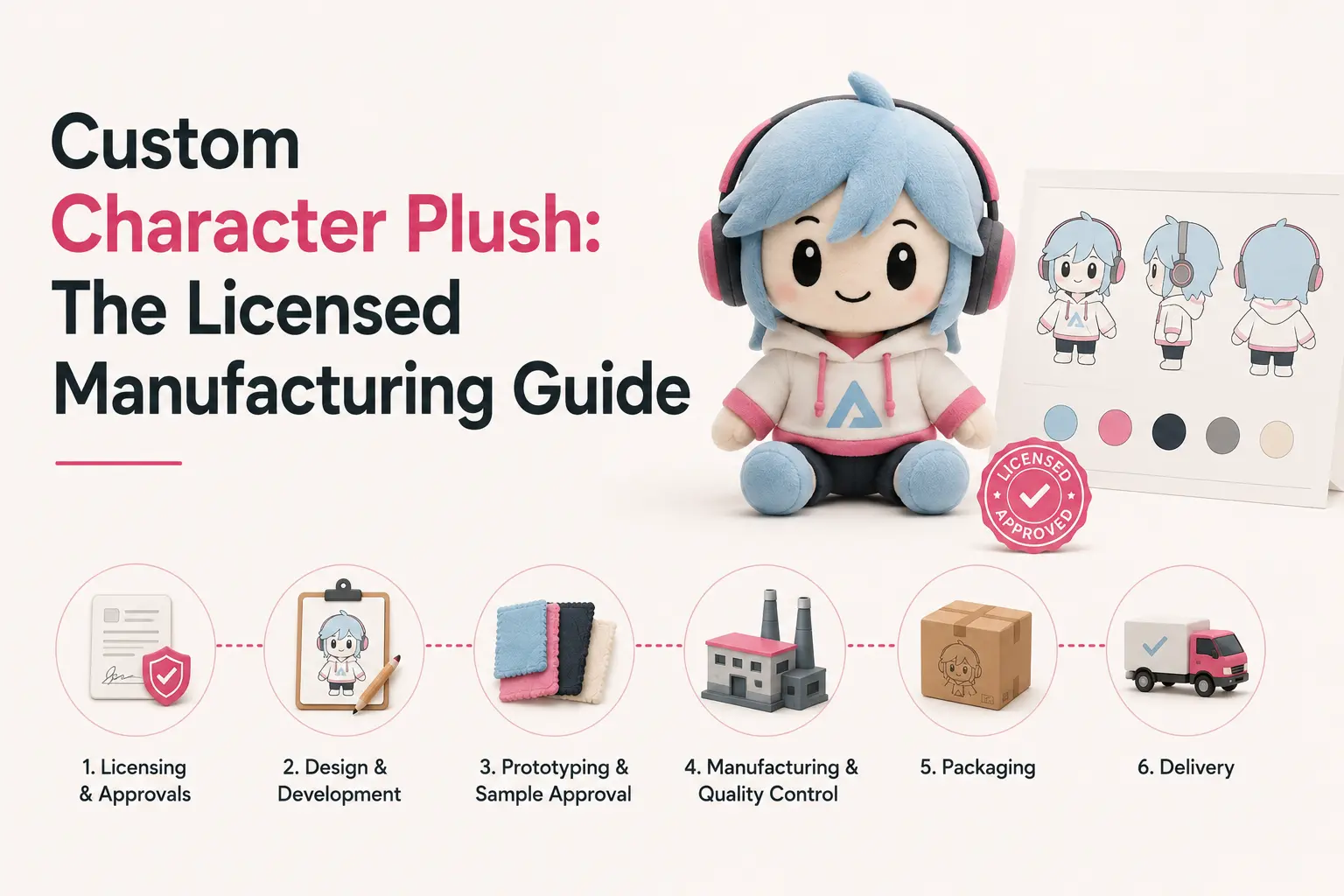
Custom character plush are soft toys based on a recognizable character, such as an anime figure, a cartoon, a game character, or a film property, made as official merchandise under a license. The critical word is license. Manufacturing plush of a character you do not own is only legitimate when the rights holder has authorized it, and doing it without that authorization is trademark and copyright infringement, whatever the search term says. This guide is about the real path: how brands and licensees produce official character plush, what the licensing side involves, and how the manufacturing differs from an ordinary custom plush.
There is a clear line here, and it is worth stating up front. If the character is your own original creation, you own it and can make plush of it freely, which our guide on making a plush of your own original character covers. If the character belongs to someone else, this guide is about doing it properly, with permission, rather than producing bootlegs that get pulled and can expose you to legal action.
Licensed versus unlicensed: the line that matters
The demand is obvious. Popular characters sell, and searches for anime, cartoon, and game character plush are constant. The legal reality is just as clear.
A character like a well-known anime hero, a cartoon mascot, or a game figure is protected intellectual property. The rights holder controls who may manufacture and sell merchandise based on it. Making and selling that plush without a license is infringement, and it exposes you to takedowns, seized shipments, destroyed stock, and legal liability. Marketplaces remove listings, and customs can hold counterfeit goods.
For personal, non-commercial use, an individual making one plush of a character they love is a different situation. The moment you produce a batch to sell, you are in commercial territory where a license is required. A serious brand builds on characters it owns or is licensed to use, and treats everything else as off-limits.
How character licensing works
Producing official character plush starts long before the factory, with the licensing agreement. This is the part that separates a legitimate merchandise line from a bootleg operation.
In broad terms, licensing involves:
- Securing rights. You negotiate a license with the rights holder or their licensing agent, covering which characters, which products (plush, in this case), which territories, and for how long.
- Royalties. Licenses typically involve a royalty, a percentage of sales or a fee, paid to the rights holder, often with a minimum guarantee.
- Approvals. The rights holder controls how their character is represented. They review and approve your designs, samples, colors, and often your packaging against a brand style guide before anything is produced or sold.
- Compliance and reporting. Licensed products usually carry required legal markings, and you report sales to the licensor.
This is a business relationship, not just a manufacturing order. Established toy and merchandise companies build licensing into their model, and the approvals process is a core part of the timeline, not a formality.
How licensed plush manufacturing differs
Once the license and approvals are in place, making the plush follows the familiar custom plush process, with a few important differences driven by the rights holder’s control.
- Accuracy to the source is non-negotiable. A licensed character must match its official look. There is far less creative latitude than with an original design, because the licensor approves against a style guide and expects the plush to represent the character faithfully.
- Approval samples are a formal gate. Beyond your own sample review, the rights holder reviews and signs off on samples. Production cannot proceed until they approve, so build that round into the schedule.
- Quality expectations are higher. Official merchandise carries the character’s reputation, so licensors hold quality and consistency to a firm standard, and quality control on the run matters more.
- Anti-counterfeit and marking requirements. Licensed products often need specific labels, holograms, or authenticity features and legally required credit lines.
The underlying plush work, pattern, sampling, and production, is the same craft as any custom plush. What changes is the layer of external approval and accuracy sitting on top. For the mechanics of the sample stage that both you and the licensor rely on, see how pre-production plush samples are made.
Protecting the character and your license
Working with a licensed property adds intellectual property responsibilities in both directions.
You are handling someone else’s valuable IP, so the character art, style guides, and approvals you receive are confidential and must be protected, and your manufacturing partner needs to respect that. On your own side, you want a factory that will not run unauthorized extra units or leak the design. A reputable manufacturer keeps your tooling and files controlled and can work under a non-disclosure agreement. Our guide on plush toy IP protection, NDAs, and design rights covers how this works when you manufacture through an OEM factory, and it applies with extra force when the IP is licensed from a third party.
Choosing a manufacturer experienced with licensed work helps, because they understand the approval gates, the confidentiality, and the quality bar that licensors expect. Our custom plush toy manufacturer guide covers what to look for in that partner.
Safety applies to licensed plush too
A licensed character plush is still a toy, and the character on it changes nothing about the safety rules. If it is sold to the public or handled by children, it must meet the toy safety standards of its market, secure eyes and parts, non-toxic materials, and the required testing. Licensors typically insist on compliance as part of the agreement, since a safety failure damages their character as much as your brand. Our summary of plush toy safety standards covers what applies in the US and EU.
Frequently asked questions
Can I make plush of an anime or cartoon character to sell?
Only with a license from the rights holder. Those characters are protected intellectual property, and producing merchandise without authorization is infringement that can lead to takedowns, seized stock, and legal liability. Making one for personal use is different from producing a batch to sell.
What does a character licensing agreement involve?
Negotiating rights for specific characters, products, and territories over a set term, usually paying a royalty on sales, and submitting your designs, samples, and packaging for the rights holder’s approval against their style guide. It is an ongoing business relationship with reporting obligations.
How is licensed plush manufacturing different from a normal custom order?
The character must match its official look closely, the rights holder formally approves samples before production, quality expectations are higher, and products often need specific legal markings or anti-counterfeit features. The plush-making itself is the same craft.
What happens if I sell unlicensed character plush?
You risk listing removals, customs seizures, destroyed inventory, and legal action from the rights holder. It also puts your manufacturing relationship and brand reputation at risk. Building on owned or licensed characters avoids all of it.
Do licensed plush toys still need safety testing?
Yes. The license does not change the safety requirements. A character plush sold to the public or handled by children must meet its market’s toy safety standards, and licensors usually require compliance as a condition of the agreement.
Making official character plush the right way
Character plush sells because the character is loved, and the only durable way to build on that is with permission. Secure the license, work through the rights holder’s approvals, and hold the accuracy and quality they expect, and you get official merchandise that can be sold openly and reordered. Try to shortcut it with an unlicensed character and you are building on ground that can be pulled out from under you at any moment. Keep your line to characters you own or are licensed to make, protect the IP in both directions, and meet the same safety standards as any other toy.