
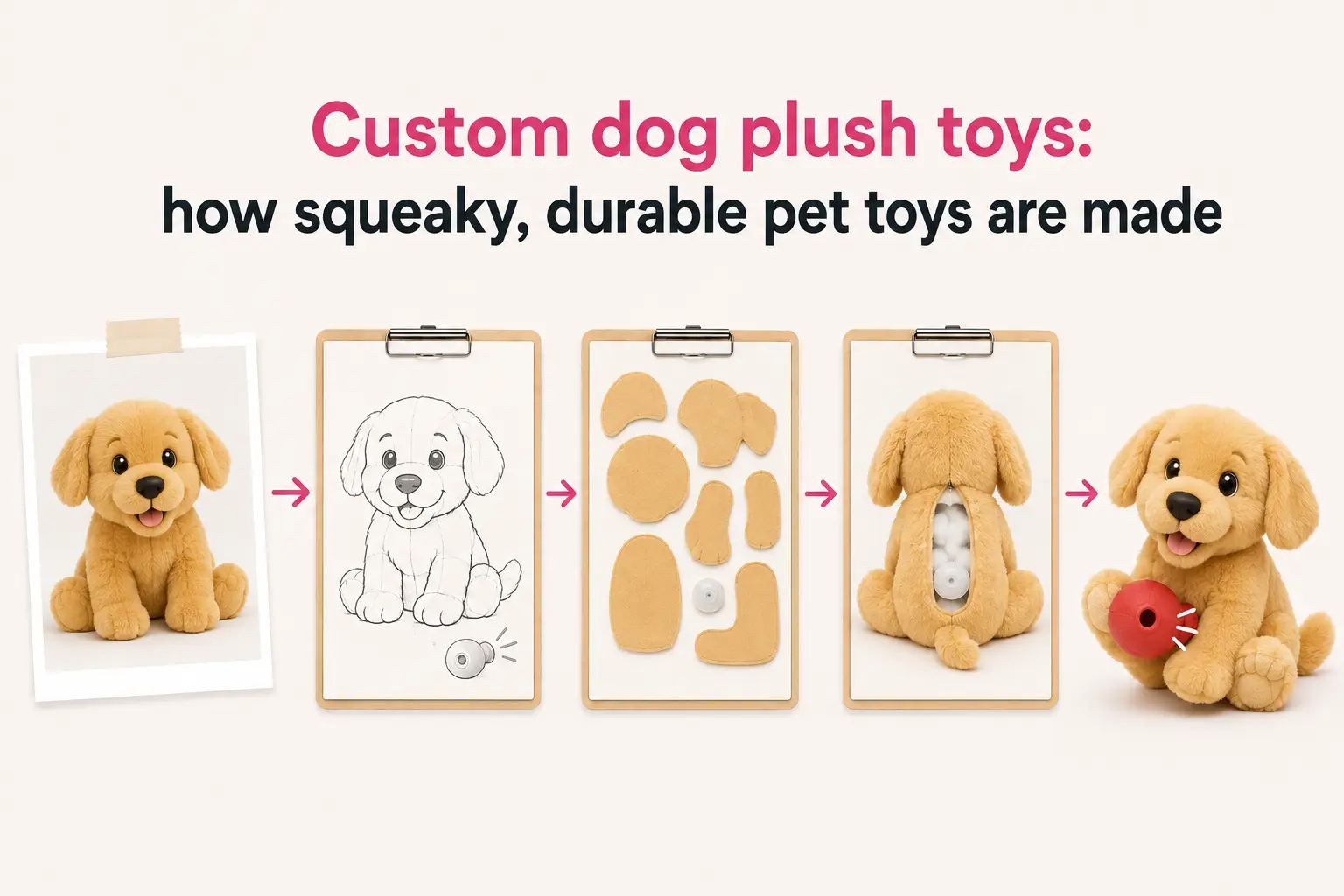
Custom dog plush toys are soft toys made for dogs to play with, produced to a pet brand’s own design and built to survive chewing, tugging, and carrying. They differ from display or replica plush in almost every way that matters: the seams are reinforced, the fill and any sound elements are chosen for a mouth rather than a shelf, and the materials are selected to be safe when a dog bites through them. If you are a pet brand sourcing your own line, the design is the easy part. Durability and safety are what separate a toy that lasts from one that is destroyed and returned in a week.
This is a genuinely different product from a plush a person keeps, and treating it like ordinary plush is how brands end up with returns and safety complaints. Here is how these toys are actually made and what to specify.
What makes a dog toy different from a display plush
A plush meant for a shelf is built to look good. A plush meant for a dog is built to be attacked. That single difference drives the whole construction.
The main departures from standard plush:
- Reinforced seams. Dogs pull, shake, and bite at seams first. Dog toys use stronger stitching, often double-stitched or with reinforced stress points, so the toy does not split and spill its fill.
- Fill choice. Some dog toys use standard fiberfill, but many use less fill or none at all, because stuffing is the thing dogs pull out and can swallow. Flat, low-stuffing, and stuffing-free designs are popular for exactly this reason.
- Sound elements. Squeakers and crinkle are added to make the toy engaging, and they have to be secured so a dog cannot reach them easily.
- Materials that stay safe when breached. A dog will eventually get inside the toy, so the fabric, thread, and any internal parts must be non-toxic and free of hazards even when the toy is torn.
A brand that specs a dog toy like a cuddly keepsake gets a toy that fails on contact with an actual dog. The construction has to assume the toy will be chewed.
Squeakers, crinkle, and how sound is built in
The sound is a big part of why dogs and owners love a plush toy, and there are a few ways to add it.
- Squeakers. A small air-filled unit that squeaks when bitten. It sits inside the toy, secured in a pocket so it stays put. Some premium toys use multiple squeakers or replaceable ones.
- Crinkle. A crinkle film layer, often in ears, wings, or a flat body, that makes a rustling sound when crushed. It adds engagement with no rigid parts.
- No-sound. Some toys are deliberately quiet, either for calm play or for the plush-and-comfort market.
The important engineering point is containment. A squeaker or any hard element must be sewn in so a determined dog cannot easily extract and swallow it. This is where a manufacturer experienced in pet toys matters, because the same squeaker installed carelessly becomes a hazard.
Durability: designing for the chewer
Durability is the number one thing owners judge a dog toy on, and it is a design decision, not a fabric brand.
The levers that make a dog toy last:
- Stronger fabric. Tougher plush fabrics and backing resist tearing better than thin, delicate pile.
- Reinforced construction. Double stitching, bar-tacked stress points, and reinforced seams at ears, limbs, and any protruding part.
- Fewer weak points. Every thin limb, dangly ear, and narrow neck is a place a dog can grab and rip. Simpler, chunkier shapes survive longer.
- Rope and tug reinforcement. Toys that combine plush with rope for tugging need the rope anchored securely into the body, or the two parts separate.
Be realistic with your customers, though. No plush dog toy is indestructible, and toys marketed to aggressive chewers set an expectation that plush struggles to meet. Positioning a plush toy for gentle-to-moderate chewers, with tougher materials for the rest, is more honest than promising it will survive a power chewer.
Pet safety and materials
Dog toys are not covered by children’s toy safety rules in the same way, but that does not mean anything goes. A toy a dog chews and partially ingests has real safety stakes.
What matters:
- Non-toxic materials throughout. Fabric, thread, fill, dyes, and any squeaker must be safe if a dog mouths or swallows small amounts.
- No dangerous hard parts. Plastic eyes and noses are a common failure point, since a dog can chew them off and swallow them. Safe dog toys use embroidered features or securely embedded safe alternatives instead of glued-on plastic eyes.
- Secure containment of sound units. As above, squeakers and crinkle must stay inside.
- Honest size guidance. A toy too small for a large dog is a choking risk, so size and breed guidance protects both the dog and your brand.
Requirements and testing for pet products vary by market and are different from children’s toy standards, so confirm what applies where you sell. If your pet toys will also be handled by children, or you also make children’s plush, the children’s rules apply to those products, and our summary of plush toy safety standards covers that side.
Cost, minimums, and working with a factory
Custom dog plush toys price on the familiar logic: a one-time setup and sample fee to develop your design, then a per-unit price that drops as the quantity grows. The specifics that move cost here are the reinforcement, the sound elements, and the fabric grade.
A few practical points for a pet brand:
- Reinforcement and squeakers add a little per unit, and they are worth it. Skimping on seams to save cents produces returns.
- Sample the durability, not just the look. When you review the prototype, check the seams and any sound unit, not only whether it resembles your artwork. The approved sample is what production matches, so a weak sample means a weak run. For what the prototype stage involves, see how pre-production plush samples are made.
- Start at a sensible minimum. If you are testing a new pet line, our low-MOQ custom plush overview shows where minimums begin, and the guide to ordering custom plush lays out the full cost picture.
Because dog toys live or die on construction, work with a manufacturer that makes pet toys specifically. Our pet plush toy factory guide covers choosing that partner.
Frequently asked questions
How are custom dog plush toys made more durable than regular plush?
Through stronger fabric, reinforced and double stitching, bar-tacked stress points, and simpler chunkier shapes with fewer thin parts for a dog to rip. Construction assumes the toy will be chewed rather than displayed.
Are plush dog toys safe if my dog tears them open?
They should be made so that the fabric, thread, fill, and any squeaker are non-toxic, and so hard parts cannot be easily swallowed. Safe dog toys use embroidered eyes instead of glued plastic ones and secure squeakers inside a pocket.
Should a dog plush toy be stuffed or stuffing-free?
Both exist. Stuffing-free and low-fill designs are popular because dogs pull stuffing out, which reduces mess and ingestion risk. Stuffed toys feel plusher but need secure seams to keep the fill contained.
Can plush dog toys survive aggressive chewers?
No plush toy is truly indestructible, and marketing one to power chewers oversells it. Tougher materials and reinforcement help, but plush is best positioned for gentle-to-moderate chewers to keep customer expectations honest.
Do dog toys follow the same safety rules as children’s toys?
No, pet product requirements differ from children’s toy standards and vary by market. That said, non-toxic materials and no easily swallowed hard parts still matter. Confirm what applies where you sell, and treat any children’s plush you make under the children’s rules.
Building a dog toy line that lasts
The design gets a dog toy noticed; the construction decides whether it survives. Spec reinforced seams, choose a fill strategy that suits a chewing mouth, contain any squeaker securely, and use embroidered features instead of glue-on plastic. Set honest durability expectations with your customers, size the toy to the dog, and sample for strength rather than looks. Get those right, with a factory that actually makes pet toys, and you get a line that earns repeat buyers instead of returns.