
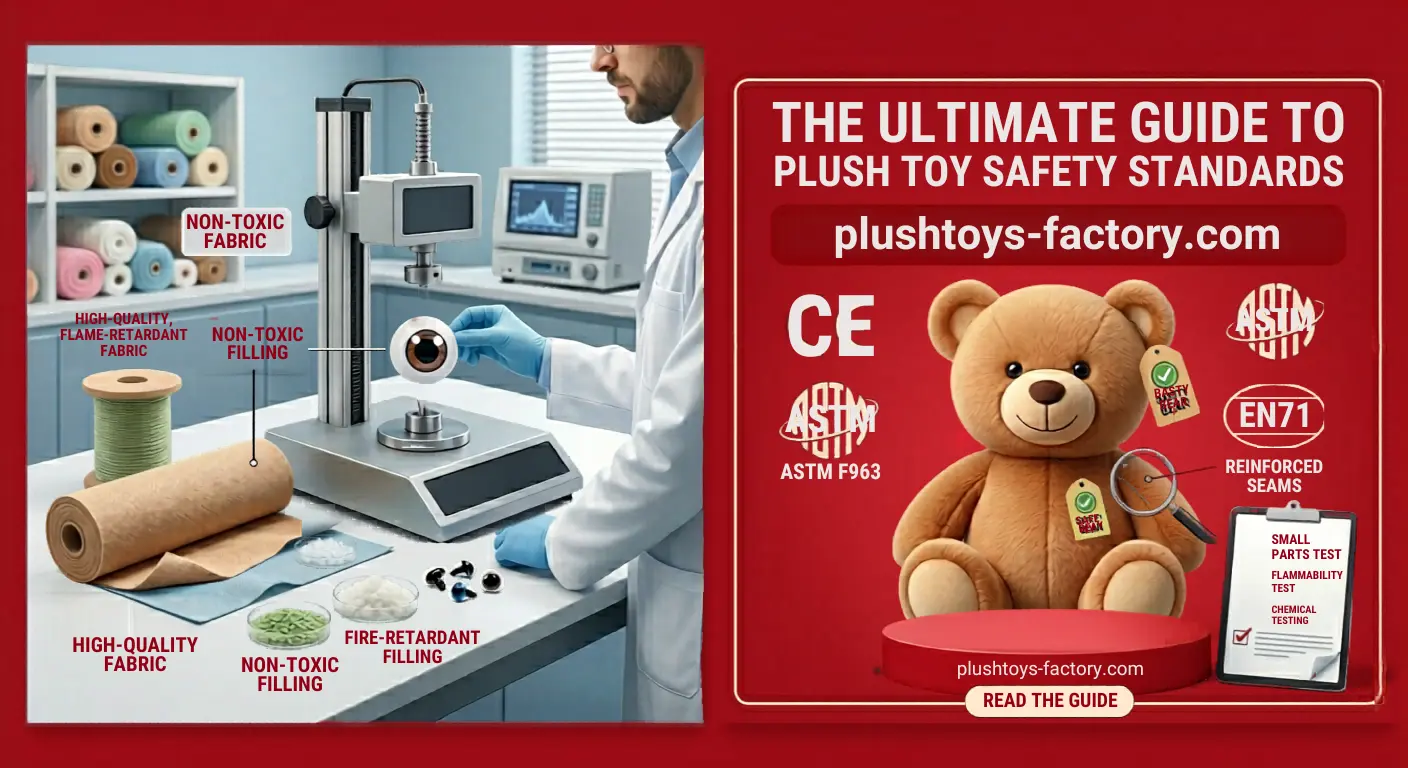
The global plush toy market is facing its biggest regulatory change in ten years. It is valued at $15.6 billion in 2025 and expected to grow to $21 billion by 2034. This industry is about more than just being “soft and cuddly,” but the plush toy safety standards have become the mandate. For manufacturers, distributors, and private-label brands, the 2026 scene features high-tech compliance, strict chemical bans, and a shift toward adult-collector-quality standards. If you work in the B2B space, staying up to date on plushies’ safety standards is crucial. It’s not only about avoiding recalls; it’s also about securing your position in a supply chain that demands complete transparency.
Understand the Complete Manufacturer’s Roadmap to Plush Toy Safety: Navigating 2026 Regulations
The most significant change for manufacturers this year is moving from traditional paperwork to digitalization. Let’s understand this phenomenon one by one:
The 2026 Regulatory Shift: From Labels to Digital Passports – ASTM F963 & EN 71
The digital transformation of regular work to the Digital Product Passport (DPP) in the European Union is a functional regulatory shift. As per the New EU Toy Safety Regulation (2025/2509), which is starting from January 1, 2026, the EU is replacing the 2009 directive with a stricter regulation. While the CE mark remains, how we demonstrate compliance has changed:
Digital Product Passport: All CE-certified toys must now include the following:
- A data carrier, which is usually a QR code linking to a digital profile.
- This profile must contain the Declaration of Conformity and technical safety data.
- It becomes easily accessible to customs and consumers.
Supply Chain Responsibility: For the first time in history, “fulfillment service providers” such as warehouses and logistics hubs also share the legal responsibility of ensuring a toy is compliant before it reaches the shelf.
Detailed ASTM F963 Compliance: The US Market in 2026
When talking about the United States, the CPSC (Consumer Product Safety Commission) is tightening requirements for ASTM F963 compliance. Their main focus for 2026 is heavily on “foreseeable misuse” with the rise of interactive plushies.
What Are the Key Engineering Challenges for Manufacturers in 2026?
- Interactive Plush & Electronics: With AI-enabled plush toys becoming popular. ASTM F963 now emphasizes battery compartment security and limits on sound levels to prevent hearing damage.
- The Testing or Tension Standard: Standard testing continues, but there is now greater emphasis on seam integrity for “weighted plush” toys. If your toy contains glass beads or heavy pellets, a seam failure could lead to significant issues, including a Class I recall.
- PFAS-Free Commitment: Leading companies like The Plushtoys Factory have committed to being completely PFAS-free this year. Although this isn’t yet a federal requirement for all plush toys, being “Forever Chemical Free” is fast becoming essential for major retailers.
The Cost of Compliance: Budgeting for 2026
Understanding the financial aspects of plush toy safety standards is essential for maintaining healthy profit margins. Based on current industry data, here’s what the B2B sector can expect:
Expense Item
- Estimated Cost (2026)
- Strategy for ROI
- Prototyping/Sampling
- $100 – $300 per design
- Most factories credit this back upon meeting the MOQ (500–1000 pcs).
Lab Testing (ASTM/EN71)
- $1,200 – $2,500 per SKU
- Group “families” of toys (same fabric, different shape) to lower chemical testing costs.
Digital Passport Setup
- $0.10 – $0.50 per unit
- Integrate QR printing directly into the silk-screened or woven “tush tag.”
The Kidult & Sensory Trend: New Safety Considerations
In 2026, plush toys are not just for kids anymore. As per the reports, the adult market is driving a 9.0% compound annual growth rate (CAGR) in Europe. However, marketing to adults does not exempt you from safety rules.
The Food-Imitation Trap: A major update to EN 71-1:2026 introduces stricter rules for toys that resemble food (e.g., plush croissants or boba tea). If a toy looks, smells, or feels like food, it must pass specific visual and sensory checks to ensure children won’t try to eat it.
Neurodivergent Design: Sensory plushies made with “extra soft” microfibers and hybrid knit textures are very popular. Manufacturers must ensure these different fabrics don’t shed fibers, which is now a focus for safety inquiries.
Practical Advice for Toy Brands and Startups
For all of the B2B businesses, brands, and startups, consider the circular economy to gain authority in the toy market in 2026 and beyond.
Circularity and Traceability
2026 is the year of the Life Cycle Assessment (LCA). Brands that can prove their stuffing comes from recycled PET or bio-based materials. They can trace that material back to the source and are securing major contracts with big-box retailers.
Expert Insight: Don’t just focus on what is forbidden; also test for sustainability. Compliance is the minimum; transparency is what allows you to charge a premium.
Navigating the complexities of plush toy safety standards can seem overwhelming. With the 2026 shift toward digital transparency and regulations against “forever chemicals.” However, for those in the industry, these standards represent more than just expensive lab tests or bureaucratic obstacles. They build consumer trust. In a time when a brand’s reputation can falter or thrive from a single viral social media post, ensuring your products meet ASTM F963 compliance and carry the CE mark serves as your best insurance policy.
Conclusion
As we advance toward Digital Product Passports and circular manufacturing, the definition of a “high-quality” toy is changing. Being soft is no longer enough. A plush toy must also be scientifically sound, chemically safe, and ethically sourced.
By adopting these plush toy safety standards as a guide for excellence, you aren’t just following regulations; you are helping create a safer, more sustainable play environment. Ultimately, when a child picks up one of your toys, they should feel comfort, and that comfort starts with the careful work you do for safety long before the toy leaves the factory.
Disclaimer! “This guide is only for informational purposes. For specific legal compliance, always consult with a certified laboratory.”