
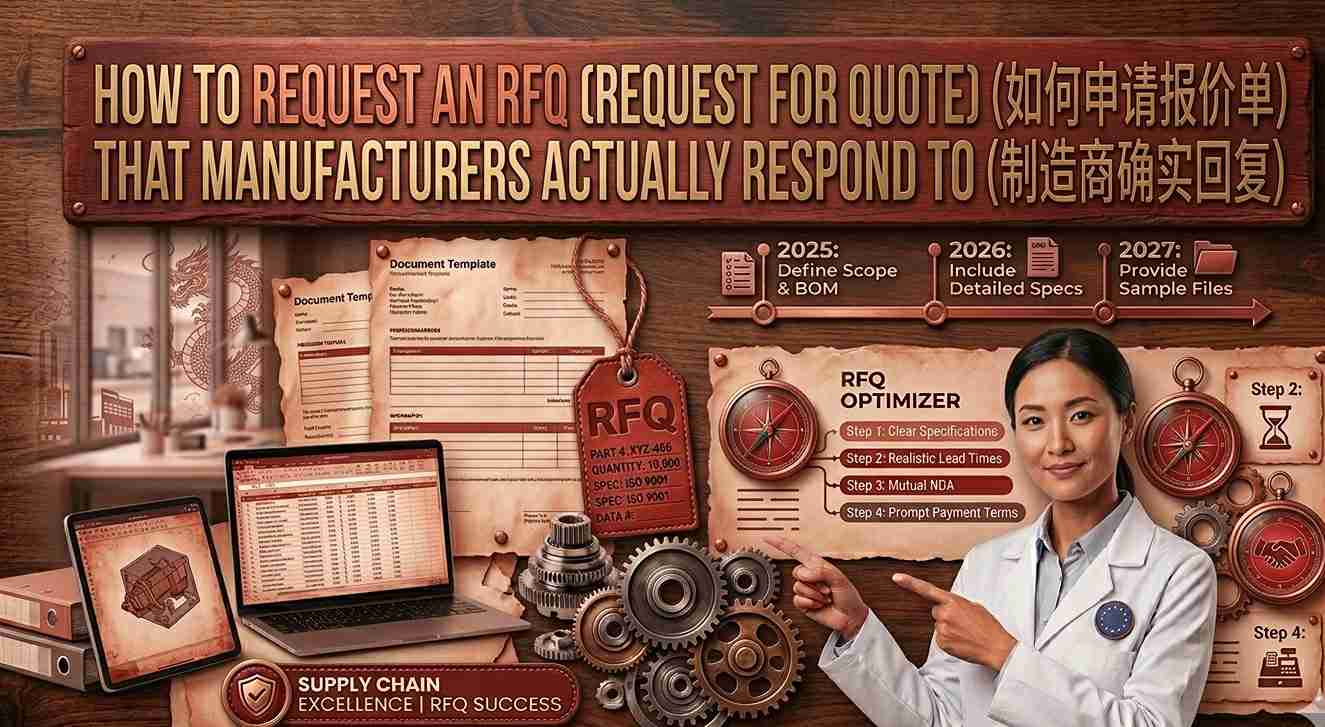
If you are sourcing products like apparel and plush toys, you often send an RFQ to manufacturers. RFQ Stands for (Request for Quote). The RFQ process is so important to businesses that need a consistent supply of a specific number of standard products.
In this blog, we’ll tell you how to write an effective RFQ that the manufacturer actually responds to.
Why Are Most of the RFQs Being Ignored
It usually happens that many companies send RFQs on their own or before a request for proposal (RFP). But there is a common problem: buyers send RFQs and receive no reply. This happens for some reason, and the reason is very simple: manufacturers receive thousands of RFQs within a week. They only reply to those RFQs that are clear and have some serious issues.
The real truth about the ignorance of most RFQs is that in these RFQs,s there is no clarity. There is a lack of related information. That’s why manufacturers only 30% of the RFQs they receive.
Manufacturers often ignore RFQs because:
- The request is too vague
- The buyer looks inexperienced
- There is no clear order quantity
- Too many unknown details
- It looks like “price shopping only.”
How Should An RFQ Be Written?
In simple words, an RFQ is a message to a supplier to ask for product price, quality, quantity, timeline, and all product details in a clearer way that the manufacturer understands and replies to it. The clearer your RFQ is, the more chances of a reply from the manufacturer.
-
Start With A Clear Product Description
Whenever you think of sending an RFQ to a manufacturer, one thing to keep in mind is to always send a detailed RFQ that clearly states what you want. You have to include product type, size, color, fabric, other material, and design details.
Bad example of an RFQ, hi, I want a soft toy. Send price. This shows an inexperienced style and does not clearly mention the instruction. This type of RFQ never gets a response from the manufacturers. On the other side, you have some good examples: Hi, I need a 25 cm plush teddy bear made from polyester fabric, with embroidered eyes and PP cotton filling. Clear product details and a clear tone of message can increase the chances of a response from the concerned department.
-
Must Include Item Quantity
This is a very important point when you write a message. One of the biggest mistakes is not mentioning the proper quantity of product. This type of message, which lacks the detailed quantity of production,t can not be responded to. Because factories need quantity to calculate the product cost, labour cost, and production time as well. Small order, high cost per piece, bigger order, low cost per piece.
If you have no idea about the product’s exact quantity, give an estimate. Example:
“Initial order: 1,000 units. Potential for repeat orders.”This shows you are serious.
-
Add Images for Reference
Manufacturers understand that visual files and images can give more clarity and reduce confusion. It is also helpful for speeding up quoting. Visuals are better than text. RFQs that have images get a faster response. RFQ includes Images, CDs, and files, get easy replies.
-
Mention the Price
Some buyers do not mention price because they think that it is not important. But in reality, factory manufacturers are more like those messages that mention a proper price list. It can help them to tell you a realistic fact that your given budget is enough or not for the product. It is also helpful in the sense that they can quickly tell you whether they can meet your expectations or not.
Example: My target price is $3–$4 per unit. This avoids long back-and-forth discussions.
-
Be Clear About Quality Requirements
When quality is most important for your product,t then it is also important to clearly mention the product quality. Because different buyers demand different quality levels. Some want material quality, Safety standards (like EU or USA requirements), packaging needs, etc. If you are clear about quality requirements, then it gets a better response.
Example: Product must meet EU EN71 toy safety standards. This helps suppliers quote correctly and builds trust.
-
Ask the Right Question
A good RFQ is not just about giving information; it is about asking smart questions, too. This shows that you understand the process. It also shows professionalism. Always try to ask smartly. For Example:
- What is your MOQ (Minimum Order Quantity)?
- What is the production lead time?
- Can you provide samples?
- Do you have similar products?
This can help both the sender and receiver to understand the needs of others. It helps to manage things smoothly.
-
Introduce yourself briefly
Always introduce yourself with your company details briefly. The manufacturer wants to know who they are dealing with. You must include your name or company, your market (Amazon, retail, wholesale), and your target country.
Example: We are a UK-based brand selling children’s toys online. Suppliers prefer buyers who look like long-term partners.
Common Mistakes to Avoid While Sending An RFQ to the Manufacturers
Your RFQ must be short, simple, clear, well-structured, easy to understand, and not too long. Always try to keep in mind that you send your RFQ on weekdays to get more chances to reply. If you don’t get a reply, follow up politely. But don’t send messages again and again; it can look unprofessional.
Don’t send incomplete information; it creates confusion and delays. If you just ask for only the best prices, factories may ignore you. So never ask this type of question in RFQs.
RFQ As A Path to Build A Relationship
An RFQ is the first step to building a relationship with a supplier. So if the supplier responds to your RFQ, you must follow these few things.
- Respond quickly
- Be respectful
- Ask clear questions
Over time, your relationship with suppliers is strong. They can give you better prices and faster production.
Fazit
If you receive a response from manufacturers, it’s not about Luck. It’s about clarity, professionalism, and preparation of your RFQ. Most RFQs fail because they lack important details or are unclear. When you provide detailed information, realistic expectations, and a professional approach, your chances of receiving replies increase significantly. The supplier notices your attention to detail and easily understands what you want because your RFQ is clear, specific, realistic, and professional.
A strong RFQ not only gets responses; it helps you find the right manufacturing partner and build a successful sourcing business. In global trade, good communication is key. A well-written RFQ is your first step toward success.