
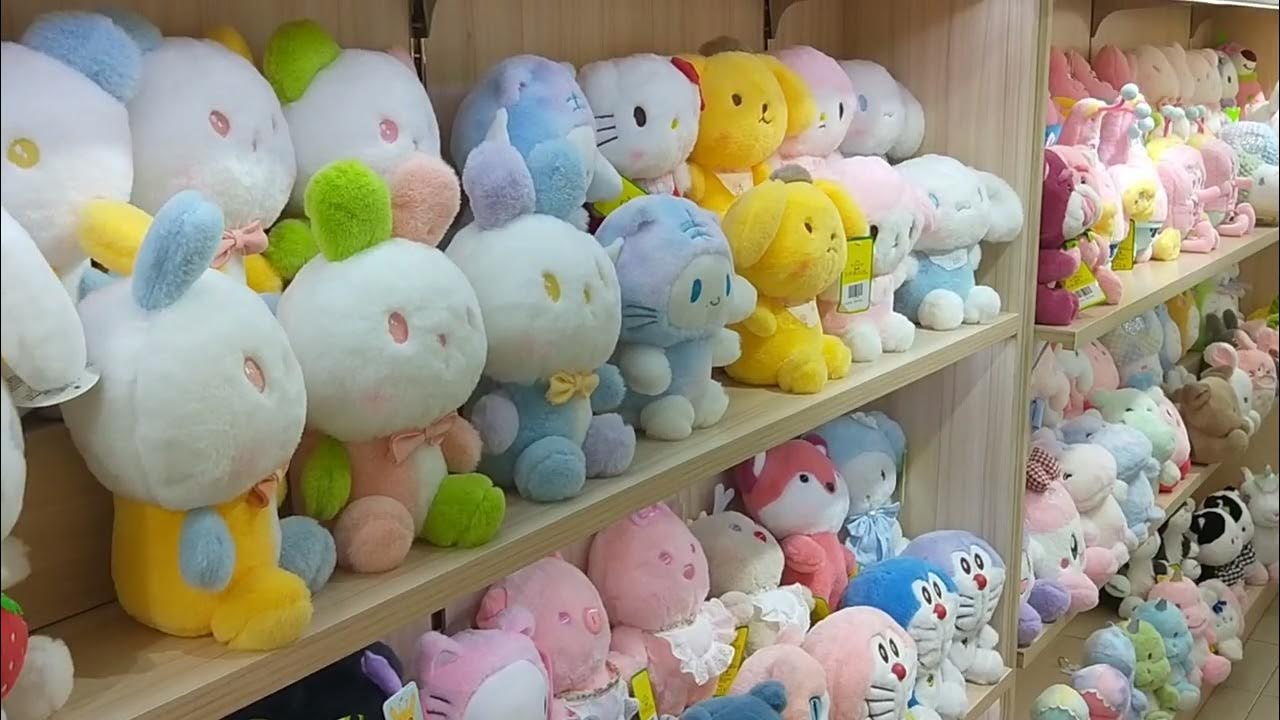
If you are a brand owner, importer, or procurement manager sourcing from a stuffed toy factory, sending an RFQ too early can cost you time, money, and reputation. I have seen buyers lose entire seasons because they rushed into custom plush toy manufacturing without properly evaluating the factory behind the quotation.
The global toy market continues to grow, with North America representing one of the largest consumer bases. According to data from The Toy Association (USA) and industry reporting from Statista, plush toys remain one of the most resilient and emotionally driven categories in the toy segment. However, growth also means more suppliers entering the market, not all of them qualified for compliance-heavy markets like the US and Canada.
This guide explains, in real operational detail, how to evaluate a plush toy factory before placing an RFQ. We will cover:
– Factory capability assessment
– Material sourcing verification
– Production workflow review
– Stitching and structural integrity checks
– Safety compliance validation for ASTM F963, CPSIA, and EN71
– Quality control systems
– MOQ and scalability logic
– Red flags that experienced buyers watch for
This is written from factory-floor experience, not theory.
Why Factory Evaluation Matters Before an RFQ
An RFQ is not just a price inquiry. It is the beginning of a production relationship.
When buyers request quotes from a stuffed toy factory without evaluating:
- Material sourcing standards
- Production capacity
- Compliance readiness
- Internal quality control systems
They often receive unrealistic pricing or incomplete technical breakdowns.
In custom plush toy manufacturing, 70 percent of final product quality is determined before bulk production even starts. That includes fabric selection, stitch density planning, pattern accuracy, and stuffing ratios.
If a factory cannot clearly explain its production logic, it will struggle under pressure when deadlines tighten.
Step 1: Assess the Factory’s Manufacturing Infrastructure
1.1 Production Layout and Workflow
A serious stuffed toy factory should have clearly defined production zones:
- Raw material warehouse
- Cutting section
- Embroidery and printing
- Sewing lines
- Stuffing and shaping
- Hand finishing
- Metal detection
- Final inspection
- Packing area
If materials and finished goods are mixed together, contamination risks increase. In North American markets, cross-contamination failures can result in rejected shipments or recalls.
Ask for:
- Factory layout photos
- Production flow explanation
- Average monthly capacity in units
- Peak season capacity
If a factory claims 500,000 units per month but has only 40 sewing operators, the numbers will not align.
1.2 Machinery and Equipment Review
In custom plush toy manufacturing, machinery affects consistency.
Look for:
- Computerized embroidery machines
- Fabric cutting machines or laser cutting
- Overlock and lockstitch industrial machines
- Metal detectors calibrated daily
- Weighing systems for stuffing control
Manual-only factories struggle with repeatability at scale.
Machine-assisted cutting improves pattern consistency. Poor cutting precision causes seam stress later.
Ask for machine lists and year of equipment purchase. Outdated equipment increases defect rates.
Step 2: Evaluate Material Selection Standards
2.1 Fabric Sourcing Transparency
Fabric is the foundation of plush toy durability.
Common materials include:
- Korallenvlies
- Minky
- PV-Samt
- Kunstfell
- Nylex
- Felt
- Vegan leather
A qualified stuffed toy factory should provide:
- Fabric GSM specification
- Pile height details
- Colorfastness reports
- Flammability data
If the factory cannot provide supplier information or testing documentation, that is a risk.

What Happens When Poor Fabric Is Selected
I have seen shipments rejected in the US due to:
- Excessive fiber shedding
- Dye transfer during saliva testing
- Surface fiber detachment failures
Poor fabric increases:
- Seam stress
- Color fading
- Customer complaints
- Safety compliance risks
Low-cost fabric may reduce unit price by 5 percent but increase returns by 15 percent.
2.2 Stuffing Material Control
Stuffing must meet CPSIA and ASTM F963 standards in the US.
Typical stuffing:
- Virgin polyester fiber
- Recycled polyester fiber
- PP cotton
Improper stuffing ratios cause:
- Deformation after compression
- Uneven shape
- Lump formation
Professional custom plush toy manufacturing operations weigh stuffing per unit. Random stuffing leads to inconsistent product feel.
Ask:
- Is stuffing weighed or estimated?
- Is recycled content documented?
- Are flammability tests available?
Step 3: Review Pattern Development and Sampling Capabilities
3.1 In-House Pattern Making
A serious stuffed toy factory should have experienced pattern engineers.
Pattern development includes:
- 2D technical drawing conversion
- Seam allowance planning
- Turn gap design
- Structural balance testing
If patterns are outsourced, development time increases and IP protection risk grows.
Ask for:
- Sample development timeline
- Revision policy
- Number of prototype rounds included
3.2 Sample Evaluation Checklist
Before RFQ, request a development sample and inspect:
– Seam alignment
– Stitch density per inch
– Embroidery thread consistency
– Stuffing firmness
– Structural symmetry
If the prototype already shows open seams, bulk production will multiply that defect.
Step 4: Stitch Density and Structural Integrity
Stitch density directly impacts durability.
Typical plush seam density ranges:
- 6 to 10 stitches per inch depending on fabric type
Eine geringe Stichdichte führt zu:
- Open seams
- Stuffing leakage
- Safety failure during tension tests
During audits, I check:
- SPI measurement
- Thread quality
- Needle type compatibility with fabric
Factories focused only on speed reduce stitch density to increase output.
That decision reduces durability.
Step 5: Safety Compliance Verification
For US and Canadian markets, compliance is non-negotiable.
5.1 Required Standards
- ASTM F963
- CPSIA
- EN71 for EU if exporting globally
- California Proposition 65 when applicable
Ask the stuffed toy factory for:
- Recent lab test reports
- Third-party lab certificates
- Tracking label samples
- Lead and phthalate test documentation
If they cannot explain tracking label requirements under CPSIA, they are not experienced with US exports.
5.2 Real Scenario: Audit Failure
I have witnessed a factory fail an audit because:
- Metal detection logs were incomplete
- Chemical storage was not labeled
- Staff training documentation was missing
The buyer delayed production by six weeks.
Audit preparation matters before RFQ.
Step 6: Quality Control Systems
A professional custom plush toy manufacturing facility should have:
- Incoming material inspection
- Inline inspection
- Final random inspection
- Metal detection testing
- Pre-shipment audit
Ask:
- What is the AQL level used?
- Who conducts inspections?
- Is there a documented corrective action process?
If inspection is only at final stage, defect rates will be high.
Step 7: MOQ, Capacity, and Scalability
7.1 MOQ Logic
MOQ depends on:
- Fabric dye lot requirements
- Accessory minimum orders
- Production line setup time
Very low MOQ factories often:
- Use leftover materials
- Substitute fabrics
- Increase per-unit cost
Balance MOQ with realistic material constraints.
7.2 Scalability Assessment
Ask:
- What happens if order volume doubles?
- Are backup sewing lines available?
- How is labor managed during peak season?
Factories relying on temporary labor may struggle with consistency.

Step 8: Cost Versus Quality Trade-Offs
Handmade Versus Machine-Assisted
Hand finishing improves detail but reduces speed.
Machine embroidery increases consistency but requires design adjustment.
Low Cost Implications
Low cost often means:
- Lower GSM fabric
- Reduced stitch density
- Lower grade stuffing
- Limited inspection
Price evaluation must include quality variables.
Step 9: Internal Linking Consideration
When evaluating suppliers for [Plush Toys], ensure that the factory’s capabilities align with:
- Custom plush toy manufacturing requirements
- OEM plush toy development
- Bulk plush toy production scalability
Do not request pricing until technical feasibility is verified.
Common Red Flags Before Sending an RFQ
- No compliance documentation
- Unrealistic delivery timelines
- Extremely low pricing without breakdown
- Refusal to provide factory photos
- Poor communication clarity
If a factory cannot answer technical questions about stitch density or stuffing ratios, they are not ready for North American compliance markets.
Häufig gestellte Fragen
1. How do I verify a stuffed toy factory’s compliance capability?
Request recent third-party lab reports for ASTM F963 and CPSIA. Verify test dates and product categories. Check tracking label samples. Ask which lab performed testing. Cross-check certification authenticity directly with the lab if necessary.
2. What is a realistic lead time for custom plush toy manufacturing?
Sampling typically requires 7 to 14 days depending on complexity. Bulk production ranges from 30 to 60 days depending on quantity and fabric availability. Peak seasons extend timelines. Always confirm material readiness before confirming delivery.
3. How important is stitch density in evaluation?
Extremely important. Measure stitches per inch on sample seams. Low stitch density leads to seam failure. High density improves durability but increases cost and production time. Balance durability with cost expectations.
4. Should I prioritize lowest price in an RFQ?
No. Lowest price often reflects lower-grade fabric, minimal QC, or reduced stuffing. Evaluate total landed cost including potential rework and returns. Quality failures cost more than small unit savings.
5. How can I check stuffing quality?
Compress the plush toy repeatedly. Observe recovery speed and shape consistency. Ask if stuffing is weighed per unit. Request flammability certification. Inconsistent stuffing leads to deformity and customer complaints.
6. What documents should a professional factory provide before bulk production?
You should receive material specs, compliance certificates, packing details, production timeline, QC plan, and tracking label format. Lack of documentation signals weak internal control systems.
Evaluate Before You Quote
Placing an RFQ without evaluating a stuffed toy factory is a gamble.
Custom plush toy manufacturing is not just about design. It involves compliance, structural engineering, material science, quality control, and scalable production planning.
Before requesting pricing:
- Verify material standards
- Inspect sampling quality
- Confirm compliance readiness
- Assess production capacity
- Understand QC systems
If you are sourcing for North American markets, thorough evaluation protects your brand reputation and prevents costly recalls.
A strong factory partner will welcome detailed technical questions. If they hesitate, reconsider.
Proper evaluation is not optional. It is the foundation of successful plush toy sourcing.