
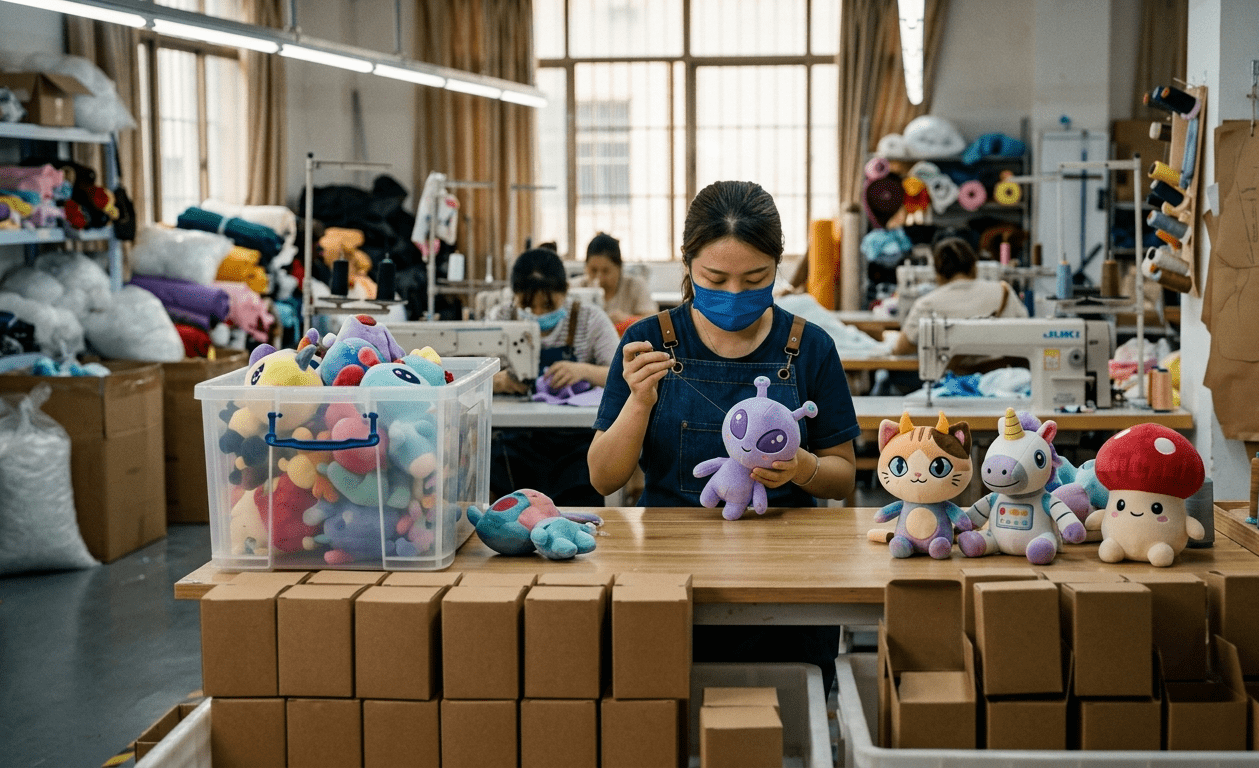
Was ist ein individuelles Plüschtier aus einer Überraschungsbox und warum bringen US-Marken ihre eigenen Produktreihen auf den Markt?
Ein Blind-Box-Plüschtier ist eine Sammelfigur, die in einer versiegelten Verpackung verkauft wird, sodass der Käufer erst beim Öffnen der Verpackung erfährt, welche Figur oder Variante er erhält. Dieses Format, das durch die “Labubu”- und „Molly“-Serien von Pop Mart populär wurde, brachte Pop Mart im Jahr 2024 einen Umsatz von über $1,7 Milliarden ein und beflügelte den „Kidult“-Sammeltrend, der derzeit die Sichtweise US-amerikanischer Marken auf Plüschartikel grundlegend verändert (Pop Mart-Jahresbericht, 2024).
Der weltweite Markt für Stofftiere und Plüschspielzeug wurde im Jahr 2025 auf $13,68 Milliarden geschätzt und wuchs bis 2033 mit einer durchschnittlichen jährlichen Wachstumsrate (CAGR) von 8,4% (Grand View Research, 2025). Blindboxen und Sammelplüsch sind das am schnellsten wachsende Segment innerhalb dieses Marktes, wobei erwachsene Sammler im Alter von 18 bis 35 Jahren die Kaufhäufigkeit um das 3- bis 8-Fache gegenüber herkömmlichen Spielzeugkäufern steigern. TikTok-Umsätze für Sammlerstücke Tipps für Plüsch Allein im Jahr 2025 wurden in diesen Formaten mehrere zehn Millionen Einheiten verkauft.
Für US-amerikanische Marken bietet sich hier eine Chance, eine Marktlücke zu schließen. A Individuell gestaltetes Plüschtier Die Fabrik kann eine Blind-Box-Figurenserie ab einer Stückzahl von 100 pro Variante herstellen – mit umfassendem Schutz des geistigen Eigentums, ASTM-zertifizierten Materialien und einer verkaufsfertigen Verpackung.
Der Blind-Box-Markt in den USA im Jahr 2026: Warum jetzt der richtige Zeitpunkt für eine Markteinführung ist
Drei Marktkräfte trugen dazu bei, dass sich das „Blind-Box“-Plüschtier-Format zwischen 2023 und 2025 von einem Nischen-Importprodukt zu einem Mainstream-Produkt im US-Einzelhandel entwickelte.
Faktor 1: Der Labubu-Effekt. Die Labubu-Puppen von Pop Mart generierten im Laufe des Jahres 2025 Millionen von Aufrufen bei Unboxing-Videos auf TikTok, wobei die Google-Suchanfragen nach diesem Begriff im November 2025 einen historischen Höchststand erreichten (Google Trends, 2025). US-Einzelhandelsketten wie Target und Hot Topic erweiterten im vierten Quartal 2025 ihre Verkaufsfläche für Blind-Box-Produkte von 25% auf 40%, um der Nachfrage gerecht zu werden.
Faktor 2: Erwachsene Sammler sind der Wachstumsmotor. Erwachsene machen mittlerweile fast 25% aller Spielzeugkäufer weltweit aus (Circana, 2025). Der “Kidult”-Verbraucher fühlt sich besonders zu limitierten Auflagen, geheimen seltenen Varianten und Figurenserien mit umfassendem Sammelpotenzial hingezogen. Diese Zielgruppe gibt pro Kauf mehr aus und erstellt mehr Inhalte in den sozialen Medien über ihre Sammlungen als jede andere Käufergruppe.
Trend 3: Social Commerce und die „Unboxing“-Wirtschaft. Ein gutes Unboxing-Video für ein Sammler-Plüschtier erzielt vier- bis zehnmal höhere Interaktionsraten als herkömmliche Produktbewertungen (CreatorIQ, 2025). Der Überraschungseffekt eignet sich von Natur aus hervorragend für Filmaufnahmen. Für Marken ist diese organische Content-Erstellung durch Kunden ein skalierbares Marketinginstrument, das kein Werbebudget erfordert.
US-Marken, die bei maßgeschneiderten Blind-Box-Plüschtieren die Vorreiterrolle übernehmen, haben einen erheblichen Vorteil. Die Wiederkaufquote bei etablierten Blind-Box-Serien liegt im Durchschnitt bei 60% bis 75% der Erstkäufer (Daten von Pop Mart, 2024).
So entwirfst du eine Plüsch-Sammelserie in Blindboxen
Die Architektur einer Serie legt fest, aus wie vielen Figuren der Grundbestand besteht, wie viele geheime oder seltene Varianten es gibt und was jede Figur einzigartig macht. Erfolgreiche Serien zeichnen sich durch drei Eigenschaften aus: eine einheitliche Formensprache (alle Figuren wirken wie aus einem Guss), individuelle Persönlichkeitsunterschiede (jede Figur ist für sich genommen unvergesslich) und eine “Belohnung für die Vollständigkeit” (der Besitz des kompletten Sets ergibt eine ansprechende visuelle Sammlung).
Eine praktische Ausgangsstruktur für eine erste Markteinführung: 6 bis 8 Basisfiguren, 1 bis 2 geheime oder seltene Varianten und eine einheitliche Größe von 10 bis 15 cm. Diese Struktur hält die anfänglichen Produktionskosten überschaubar und bietet Sammlern gleichzeitig genügend Abwechslung, um Kaufbegeisterung zu wecken.
Beim Charakterdesign für die Plüschtierherstellung muss die Herstellbarkeit in großem Maßstab berücksichtigt werden. Die erfolgreichsten Plüschfiguren aus Blind-Boxen weisen folgende Merkmale auf: einfache, kontrastreiche Silhouetten; Gesichter mit großen Augen und minimalen Details, die sich gut von der digitalen Vorlage auf die physische Stickerei übertragen lassen; abgerundete Körperformen, die sich effizient zuschneiden, nähen und füllen lassen; sowie eine begrenzte Farbpalette pro Figur (maximal 4 bis 6 Farben).
Die Variantenstruktur ist der Mechanismus, der den Sammelwert bestimmt. Seltene Varianten können Farbvarianten sein (einfach und mit geringen zusätzlichen Kosten herzustellen), Figuren mit unterschiedlichen Accessoires (etwas höhere Kosten) oder völlig unterschiedliche Figuren, die dieselbe Designsprache teilen (höchste Entwicklungskosten, aber größter Sammlerwert).
Herstellungsverfahren für die „Blind Box“-Plüschserie
- Phase 1: Fertigstellung des Serien-Designs (2 bis 4 Wochen) – Alle Charakterdesigns der Serie müssen vor Beginn der Musterproduktion fertiggestellt sein. Wird das Design eines Charakters nach Beginn der Musterproduktion geändert, beginnt der Zeitplan für diesen Charakter von vorne.
- Phase 2: Mustererstellung für mehrere Figuren (10 bis 15 Arbeitstage) – Für jede Figur der Serie ist ein eigenes Vorproduktionsmuster erforderlich. Pro Figur fallen Mustergebühren an, die in der Regel zwischen $80 und $150 liegen.
- Phase 3: Musterprüfung und Freigabe – Jedes Charaktermuster wird auf Farbgenauigkeit, Proportionen, Stickqualität und visuelle Einheitlichkeit zwischen den Charakteren geprüft.
- Phase 4: Serienfertigung (20 bis 30 Arbeitstage für 6 bis 8 Figuren mit jeweils 300 bis 500 Stück).
- Phase 5: Zusammenstellung des Sortiments und Verpackung – Das Werk mischt die Figuren gemäß dem von Ihnen festgelegten Verteilungsverhältnis (z. B. 10% selten, 90% gleichmäßig auf die Standardfiguren verteilt) in versiegelte Blindbox-Einheiten. Dieser Schritt der Zusammenstellung und Versiegelung dauert 2 bis 3 Werktage.
Verpackungsdesign für einen maximalen Effekt beim Auspacken
Die Verpackung von Plüschtieren in Blindboxen ist eine Investition in die Marke und nicht nur eine Maßnahme zum Schutz beim Versand. Sie ist das Erste, was der Käufer sieht, und die Oberfläche, die in jedem Unboxing-Video zu sehen ist.
- Verschlossene Verpackung ohne Sichtfenster – Das charakteristische Merkmal einer Blind Box ist, dass der Käufer nicht sehen kann, welche Figur er erhalten hat. Jede Verpackung mit einem Sichtfenster macht diesen Mechanismus zunichte.
- Charakterabbildungen auf den Außenflächen – Auf der Außenseite der Verpackung sollten alle Charaktere der Serie abgebildet sein, damit Käufer sehen können, was sie möglicherweise erhalten.
- Ein System mit Seltenheitsanzeige – das von außen sichtbar ist (ohne jedoch preiszugeben, welche Figur sich darin befindet) – weckt Vorfreude.
- Gestaltung des Auspackerlebnisses – Die einzelnen Verpackungsschichten (Seidenpapier, Charakterkarte, markenspezifische Innenverpackung) tragen zum physischen Auspackerlebnis bei und sorgen für TikTok den Machern mehr Inhaltselemente zum Filmen.
Für Marken, die untersuchen möchten, wie bestehende Sammelfiguren-Serien in Bezug auf Verpackung und die Präsentation von Varianten gestaltet sind, Die Brot-Familie Die Schlüsselanhänger-Serie ist ein nützlicher Anhaltspunkt für die Unterscheidung der Charaktere innerhalb einer einheitlichen Serienästhetik.
Vergleich der Formate der „Blind Box“-Serien
| Format | Figuren | Mindestbestellmenge pro Variante | Stückkosten | Am besten geeignet für |
| Mini-Schlüsselanhänger-Serie | 6-8 | 100–300 Stück | $3,00 – $5,50 | Markttest, geringer Investitionsaufwand |
| Standard-Box-Serie (10–15 cm) | 6-12 | 300–500 Stück | $5,00 – $10,00 | Kernbereich des Sammler-Einzelhandels |
| Premium-Figurenreihe (15–20 cm) | 4-8 | 500–1.000 Stück | $10.00 – $18.00 | Markt für Sammlerartikel für Erwachsene |
| Limitierte Auflage | 1-3 | 200–500 Stück | $12,00 – $20,00 | Saisal, exklusiv |
| Blindbox mit Taschenanhänger | 6-12 | 100–200 Stück | $2,80 – $5,00 | Kanal für Mode und Accessoires |
FAQ: Hersteller von individuell gestalteten Plüschtieren in Blindboxen
Wie viel kostet es, eine eigene Blind-Box-Plüschserie auf den Markt zu bringen?
Eine Serie von Mini-Schlüsselanhängern mit 6 Zeichen bei einer Stückzahl von 300 Stück pro Zeichen (insgesamt 1.800 Stück) verursacht in der Regel Produktionskosten (FOB) in Höhe von $5.000 bis $12.000, zuzüglich $500 bis $1.200 an Mustergebühren sowie Kosten für Verpackungsdesign und Druck in Höhe von $800 bis $3.000. Die Gesamtinvestition für die Markteinführung einer Markttest-Serie beläuft sich vor dem Versand auf $7.000 bis $16.000. Die gleiche Serie im Einzelhandel zu $15 bis $20 pro Stück generiert bei vollständigem Abverkauf $27.000 bis $36.000.
Wie hoch ist die Mindestbestellmenge für eine Blind-Box-Plüschserie?
Die meisten qualifizierten Hersteller akzeptieren Mindestbestellmengen von 100 bis 300 Stück pro Figur für Mini-Schlüsselanhänger und von 300 bis 500 Stück pro Figur für Standard-Sammelfiguren mit einer Größe von 10 bis 15 cm. Eine Serie mit 6 Figuren zu je 300 Stück entspricht einem Produktionsauftrag von insgesamt 1.800 Stück, was eine realistische Startmenge für eine Erstserie darstellt.
Wie kann ich meine Charakterentwürfe vor Nachahmung schützen?
Der Schutz von Designs beginnt mit der Unterzeichnung einer Geheimhaltungsvereinbarung, bevor Entwürfe an einen Hersteller weitergegeben werden. Bei kommerziell bedeutenden Originalfiguren bietet die Eintragung des Urheberrechts beim US-amerikanischen Copyright Office rechtlichen Schutz. Eine seriöse Plüschtierfabrik unterzeichnet standardmäßig eine Geheimhaltungsvereinbarung, bevor sie Designdateien erhält.
Was sorgt dafür, dass eine Blind-Box-Plüschserie viral geht?
Vier Faktoren bestimmen den Erfolg einer Figurenserie: ein starker, unverwechselbarer Charakter mit einer klaren emotionalen Anziehungskraft; ein echtes Überraschungselement durch versiegelte Verpackungen und echte Seltenheit bei Sondervarianten; ein Auspackerlebnis, das sich gut filmen lässt; sowie eine Serie, die groß genug ist, um eine Sammler-Community zu schaffen, aber klein genug, damit das Vervollständigen der Sammlung als machbar empfunden wird.
Kann ich eine Blind-Box-Plüschserie mit Figuren produzieren, die ich selbst entworfen habe?
Ja. Die Fabriken arbeiten im OEM-Modus und fertigen anhand der von Ihnen bereitgestellten Vorlagen. Stellen Sie Skizzen der Figuren aus drei Blickwinkeln (Vorderansicht, Rückansicht, Seitenansicht), Pantone-Farbspezifikationen, Stickmusterpläne und Größenvorgaben bereit. Vergewissern Sie sich, dass Sie über die vollständigen kommerziellen Nutzungsrechte an allen von freiberuflichen Künstlern entworfenen Designs verfügen, bevor Sie diese in die Produktion geben.
Benötigen Plüschtiere aus Blind Boxes eine Sicherheitszertifizierung, um im US-Einzelhandel verkauft werden zu dürfen?
Ja. Jedes Plüschtier, das über US-amerikanische Einzelhandelskanäle verkauft wird, muss die Anforderungen der Norm ASTM F963 erfüllen und über entsprechende Prüfunterlagen einer unabhängigen Stelle verfügen. Für Produkte, die von Kindern unter 12 Jahren in die Hand genommen werden könnten, ist ein Kinderproduktzertifikat vorgeschrieben. Die meisten großen Einzelhändler verlangen die Einhaltung der ASTM-Norm als Lieferbedingung, unabhängig von der Altersklasse.
Welche Einzelhändler in den USA führen Plüsch-Sammelfiguren in Blindboxen?
Ab 2026 gehören zu den wichtigsten Vertriebskanälen für Plüsch-Sammlerstücke in Blind Boxes in den USA: Hot Topic (Jugendmode und Sammlermarkt), Target (Mainstream-Konsumenten), GameStop (Gaming und Popkultur), Five Below (preisgünstiger Markt), Urban Outfitters (Lifestyle für Erwachsene) sowie online über Amazon, Whatnot und direkt über DTC.