
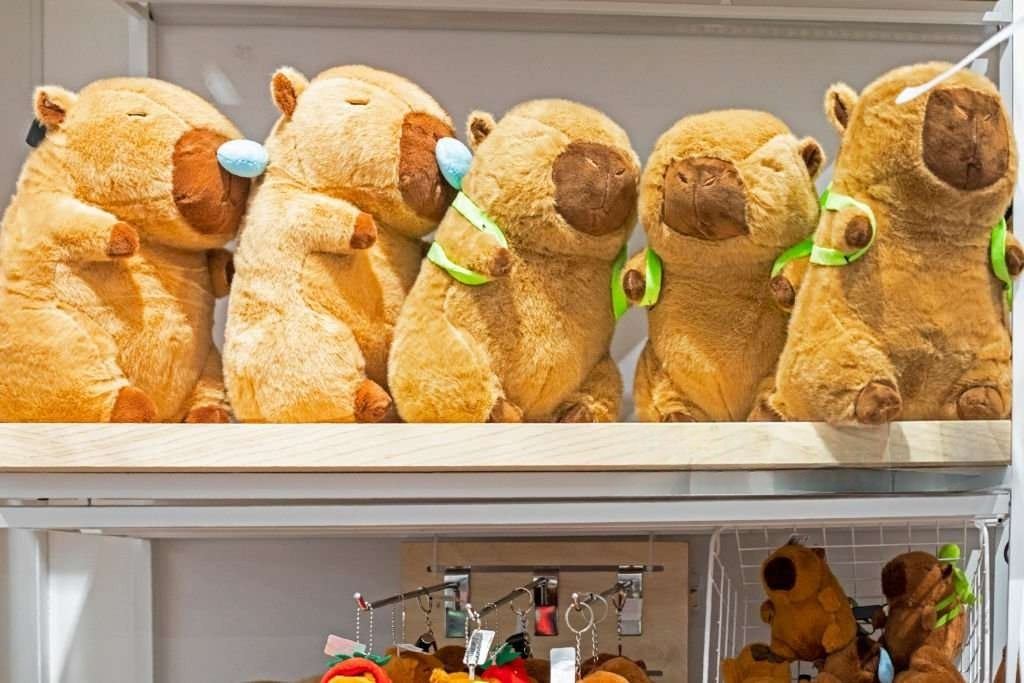
A brand owner based in Chicago called us in January.
She’d been selling private-label products for three years. Apparel, accessories, home goods. Custom plush toys were next. Her retail buyer wanted 800 units of a branded mascot on the shelf by April.
It was January 6th.
She’d already found a factory on Alibaba. Price looked right. Samples looked decent in photos. She wanted to confirm the timeline was realistic before placing the order.
It wasn’t. Not even close.
Here’s what she didn’t know — and what most US brands discover only after they’ve already committed to a timeline they can’t meet.
The Realistic Timeline: China to USA
This is the number one mistake US brands make when sourcing custom plush toys from China for the first time. They plan for the production time. They forget about everything around it.
Here’s what the actual timeline looks like from initial inquiry to product on a US warehouse shelf.
| Week | Stage | Timeline |
|---|---|---|
| 1-2 | Brief & Quote | 5-10 business days |
| 2-4 | Sample Development | 7-14 business days |
| 4-5 | Sample Review | 5-7 days per revision |
| 5-6 | Sample Approval | 1-3 days |
| 6-10 | Bulk Production | 25-35 days |
| 10-11 | QC & Documentation | 3-5 days |
| 11-15 | Sea Freight | 18-25 days |
| 15-16 | Customs Clearance | 3-7 days |
| Total | Minimum | 14-18 weeks |
The brand owner in Chicago needed the product on the shelf in 14 weeks. She was calling us on week 0. It was tight but just barely achievable, with no revision rounds and air freight for the final shipment.
If you’re planning a product launch with a fixed date, count backwards from that date. Then subtract 16 weeks. That’s when you need to place your factory order.
US Compliance Requirements for Plush Toy Imports
Every plush toy sold in the United States to children under 14 must comply with ASTM F963 — the American toy safety standard enforced by the Consumer Product Safety Commission (CPSC).
This isn’t optional. It isn’t a formality. Non-compliant toys can be detained at customs, recalled from retail, and result in significant fines for the importer.
Here’s what US compliance actually requires.
ASTM F963 Testing: Your toys must be tested against ASTM F963 by a CPSC-accepted third-party laboratory. The test covers mechanical and physical properties (small parts, pull force on attached components), flammability requirements, and chemical content limits for heavy metals and phthalates.
Testing is conducted on production samples — not design samples. The test reports apply to the specific production run, not to previous versions or similar products.
Children’s Product Certificate (CPC) Based on the test results, a Children’s Product Certificate must be issued. The CPC is your official declaration that the product complies with ASTM F963. It must be available for any shipment of children’s products to the US, and from July 2026, it must be filed electronically with CPSC before the shipment arrives.
Certificate of Conformity: Some retailers require a Certificate of Conformity in addition to the CPC. Ask your retail buyers what documentation they require before your factory order is placed — not after the shipment arrives.
What to Ask Your Factory Before placing an order, ask:
- Do you have ASTM F963 test reports from a CPSC-accepted laboratory for this product type?
- Can you provide or assist with CPC issuance?
- Do you have experience preparing the CPSC e-filing required from July 2026?
A factory with real US export experience can answer all three questions specifically. A factory that’s vague about any of them has probably not shipped to compliant US retail before.
Customs Clearance: What You Need to Know
US Customs and Border Protection (CBP) inspects toy imports. For custom plush toys specifically, there are several points where shipments get delayed — most of them preventable.
Import Classification Custom plush toys are classified under HTS code 9503.00 (toys) or a subheading depending on the specific product. Using the wrong HTS code creates customs delays and potential duty discrepancies. Confirm the correct classification with your freight forwarder before the shipment leaves China.
Required Import Documents Every shipment needs: commercial invoice (with accurate declared value), packing list, bill of lading or airway bill, certificate of origin, and — for children’s toys — ASTM F963 test reports and CPC.
Missing or incorrect documents are the most common cause of customs delays. Verify the complete document list with your freight forwarder before shipment.
Import Duties: Custom plush toys from China are subject to Section 301 tariffs in addition to standard import duties. As of 2026, additional tariffs apply to most toy imports from China. Factor this into your landed cost calculation before comparing factory prices.
Your freight forwarder can provide a precise duty calculation for your specific product. Don’t assume — calculate.
CPSC Port Surveillance: CPSC conducts surveillance inspections at major US ports. If your shipment is selected, compliance documentation must be immediately available. A shipment held for compliance review can face delays of several weeks.
This is why compliance documentation should be prepared before the shipment leaves China — not assembled after the hold notice arrives.
Finding the Right Factory for the US Market Supply
Not every Chinese plush toy factory is equipped to supply the US market properly. Whether you’re ordering custom plush toys wholesale from China or placing a branded B2B order. Here’s what separates factories that can from factories that claim they can.
ASTM F963 Track Record: Ask for test reports — not certificates — from previous US-market shipments. A factory with a real US export history will have a file of these. A factory that’s never shipped to compliant US retail will be assembling compliance documentation for the first time on your order.
CPSC Accepted Laboratory Relationships: ASTM F963 testing must be conducted by a CPSC-accepted laboratory. Major accepted labs include SGS, Bureau Veritas, Intertek, and TÜV. Ask which lab the factory uses for US compliance testing and confirm that the lab is on the CPSC-accepted list.
English Language Technical Communication Design briefs, specification sheets, compliance queries — all of this needs to flow clearly between you and the factory. Sales teams often speak functional English. But when production questions arise, you need to communicate with technical staff. A factory without English-capable technical communication creates a game of telephone between your specification and what gets produced.
Documented Quality Control Process: Ask for the factory’s written QC procedure. How is quality inspected during production? What happens when a defect is found? What AQL standard applies to outgoing shipments? Factories with real quality systems have written answers to these questions. Factories without them don’t.
US Retailer Experience If you’re selling into US retail — whether Walmart, Target, specialty retailers, or Amazon — ask the factory if they have experience with US retail compliance requirements beyond ASTM F963. Retailers often have additional requirements: specific packaging, UPC barcodes, drop test requirements, or vendor compliance manuals. A factory experienced with US retail will understand these requirements. One that’s new to it won’t.
Air Freight vs. Sea Freight: When to Use Which
Sea freight is significantly cheaper for large shipments. Air freight is significantly faster. Here’s how to decide.
Use sea freight when:
- You have 10+ weeks before your delivery deadline
- Your order is 200+ units (sea freight becomes economical at volume)
- You’re not facing an imminent launch or retail deadline
Use air freight when:
- Your deadline is under 8 weeks from factory completion
- Your order is small enough that the air freight premium doesn’t break the unit economics
- A retail or campaign date is non-negotiable
Split shipment option: For time-sensitive launches, some brands ship a smaller air freight portion first to hit the launch date, then follow with sea freight for the bulk. This costs more per unit overall but can make an otherwise impossible timeline work.
Discuss this option with your freight forwarder and factory before committing to a timeline. Not all factories can split a production run into separate shipment batches.
Landed Cost: What Your Plush Toys Actually Cost
The factory price is not your landed cost. Here’s the complete picture.
| Cost Component | Typical Range |
|---|---|
| Factory price per unit | Base price |
| ASTM F963 testing + CPC | $400-700 per product |
| Sea freight (500 units) | $800-2,000 |
| Import duties + Section 301 | Varies by product |
| Customs clearance fees | $200-400 |
| Drayage to warehouse | $150-300 |
| Total landed cost | 40-60% above factory price |
Conclusion
Getting custom plush toys from China to US retail shelves successfully requires understanding the timeline, the compliance requirements, and the landed costs — before the order is placed, not after.
Our team has been navigating this process for US and European brands for over 15 years. If you want a straightforward conversation about what your specific project requires — timeline, compliance, costs — we respond within 12 hours.
Get a factory-direct quote for your US market order →
Frequently Asked Questions
How much does it cost to import custom plush toys from China to the USA?
Beyond the factory price, budget for ASTM compliance testing ($400-700 per product), sea freight ($800-2,000 per container share depending on volume), import duties (standard toy duty plus Section 301 China tariffs), and customs clearance fees ($200-400). Total additional costs typically run 40-60% above the factory unit price.
Do I need a customs broker to import toys from China?
For most toy imports, yes. A licensed customs broker handles the entry filing, duty calculations, and communication with CBP. For toys specifically — with compliance documentation requirements — using an experienced customs broker reduces the risk of holds and delays significantly.
Can I source plush toys from China for Amazon FBA?
Yes. Amazon FBA has its own preparation and labeling requirements in addition to CPSC compliance requirements. Confirm with your factory that they can prepare FBA-compliant shipments — including FNSKU labeling, poly bagging requirements, and carton markings — before placing your order.
What happens if my shipment is held at US customs?
A compliance hold typically requires you to provide test reports and CPC documentation immediately. If documentation is complete and correct, holds are usually resolved within 1-2 weeks. If documentation is missing or incorrect, the shipment may be refused entry. Having all compliance documentation prepared before the shipment leaves China is the only reliable protection against holds.
How do I find a factory that ships to both the US and Europe?
Ask specifically about both ASTM F963 (USA) and EN71 (Europe) compliance experience. A factory with real dual-market experience maintains both sets of documentation and can advise on how to prepare orders for each market. Factories that primarily serve one market will have gaps in compliance knowledge for the other.