
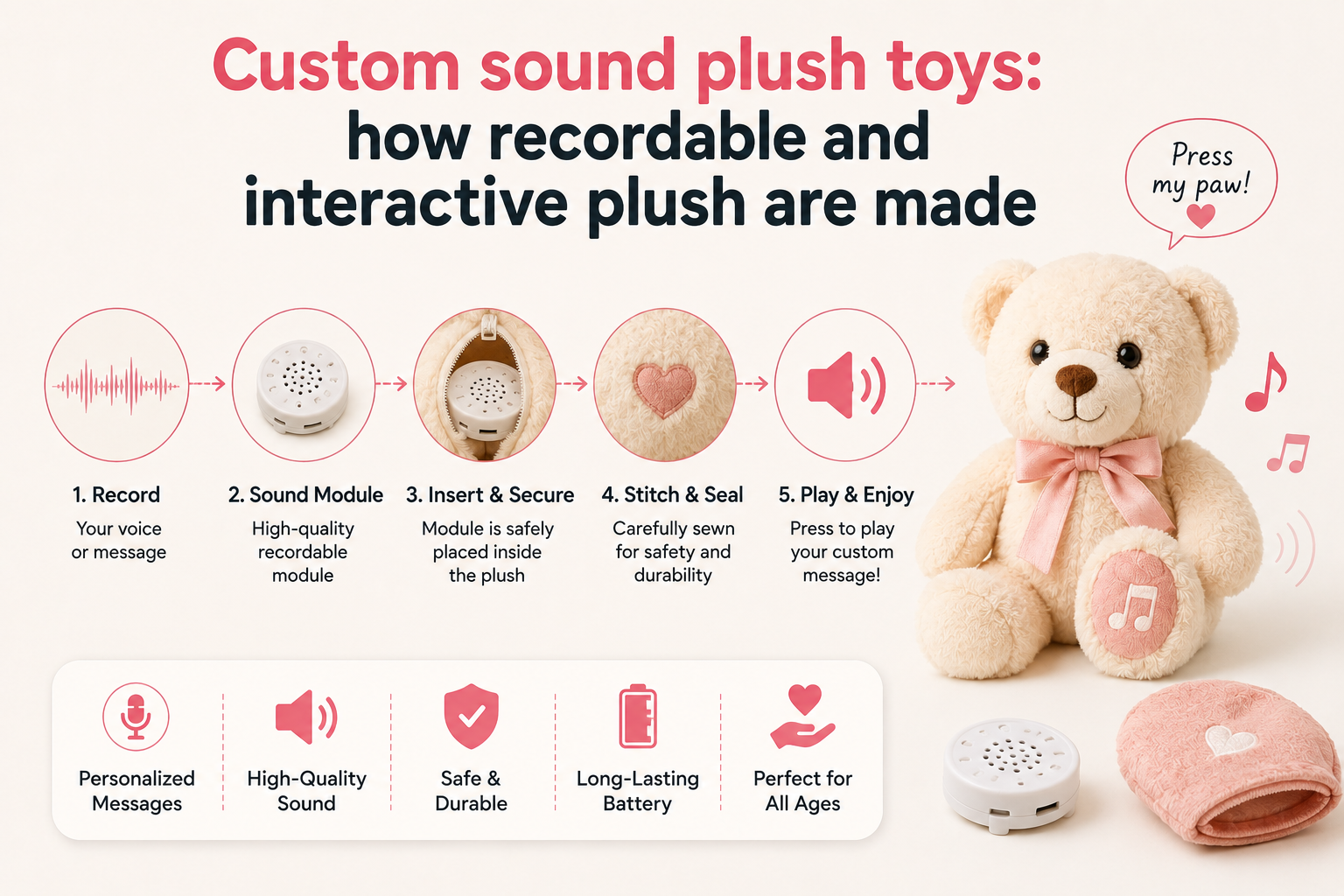
Custom sound plush toys are soft toys with an electronic module inside that plays audio, either a fixed sound triggered by a press or squeeze, or a message the owner records themselves. The plush is manufactured the same way as any custom plush, then a sound unit and battery are built into a pocket inside the body, usually behind a closed seam or a hook-and-loop flap. The audio feature is what changes the engineering, the cost, and, importantly, the safety testing.
This sits between plush manufacturing and small electronics, which is why it trips up buyers who have only ordered plain plush before. The stuffing and stitching are familiar. The module, the battery, and the compliance around them are not. Here is how the whole thing actually works and what to plan for.
The types of sound plush, and how each is triggered
“Sound plush” covers several mechanisms that feel similar to a customer but are different products to manufacture.
- Press or squeeze sound. A button or pad inside the plush triggers a pre-loaded sound: a bark, a giggle, a phrase, a song clip. This is the simplest and cheapest, and it is what most novelty and character sound plush use.
- Recordable voice. A module lets the owner record their own message, which plays back on a press. These sell as personalized gifts, because the sound is the point. Search demand shows up as stuffed animals with custom voice recording and custom talking plush.
- Motion or interactive. A sensor triggers audio or movement when the plush is picked up, hugged, or moved. These are more complex, cost more, and are usually made through a manufacturer set up for interactive plush.
- Recordable heartbeat. A specific niche where a small unit plays a recorded heartbeat, used in keepsake and memorial products.
Deciding which of these you want is the first real decision, because it sets the module, the price, and the difficulty. A press-button sound clip and a hug-activated interactive plush are worlds apart in cost and lead time.
What goes inside, in plain terms
A custom sound plush has three added components beyond the plush itself.
The sound module is a small circuit board with a speaker and either pre-loaded audio or a record-and-playback chip. It stores your sound clip and plays it when triggered.
The trigger is how the sound fires: a push button, a squeeze pad, a light or motion sensor, or a pull tag.
The power source is a battery, often a replaceable coin cell or small batteries in a screw-closed compartment. Battery choice is not a small detail, because it drives most of the safety requirements.
All three sit in a sewn-in pocket inside the plush, positioned so the button is reachable through the fabric and the battery compartment can be closed securely. The plush is built around this pocket, which is why the sound feature has to be planned from the pattern stage, not added at the end.
Safety is the part you cannot cut corners on
A plain plush has to be safe as a soft toy. A sound plush has to be safe as a soft toy and as a battery-powered product, and the second part is where brands get into trouble.
The issues that matter most:
- Battery access. Small button cell and coin batteries are a serious ingestion hazard for young children. Toys with these batteries generally require a compartment that a child cannot open without a tool, typically secured with a screw. This is a hard requirement in major markets, not a nice-to-have.
- Electronics compliance. In the US, toys with electronics fall under CPSIA and related requirements, and different markets add their own rules for electrical safety and, in some cases, wireless components. The exact testing depends on the module, the battery, and where you sell.
- Sound level. Toys held close to a child’s ear have limits on how loud they can be. A module that is too loud can fail testing.
- Secure construction. The module and battery must stay sealed inside so a child cannot reach them, which raises the bar on seam strength and closure design.
The takeaway is simple. A sound plush needs testing appropriate to a toy with electronics, and requirements vary by market and by the specific components you use. Confirm the exact standards for your battery type and destination before production, not after. Our summary of plush toy safety standards covers the toy-side rules that apply in the US and EU and is the right starting point.
How much more it costs, and why
A sound plush costs more than the same plush without a module, and the increase comes from real added parts and steps.
The cost drivers on top of a normal plush:
- The module itself. Pre-loaded press sound is cheapest. Recordable and interactive modules cost more.
- The battery and compartment. A tool-secured compartment adds material and assembly.
- Assembly labor. Someone installs, wires, and tests each unit, and a plush with electronics gets function-checked before it ships.
- Additional compliance testing. Electronics testing is separate from, and on top of, standard plush testing.
As with any custom plush, you pay a one-time development and sampling fee, then a per-unit price that falls with quantity. The module and testing push both numbers up, so sound plush tend to have a somewhat higher effective minimum before the economics feel comfortable. For how sampling fees, minimums, and unit pricing fit together, the guide to ordering custom plush lays out the structure, and our low-MOQ custom plush overview shows where minimums generally start.
Where sound plush sell well
The audio feature earns its extra cost in categories where the sound is the reason someone buys.
Personalized and gift markets are the clearest fit. A recordable plush that plays a grandparent’s voice, a message for a long-distance partner, or a heartbeat keepsake sells on emotion, and buyers pay a premium for it. The wedding and new-baby gift markets lean on exactly this.
Character and novelty plush use press sound to bring a mascot or character to life with a catchphrase or theme. Here the sound reinforces a brand or license rather than personalizing it.
The pattern across both: sound plush work when the audio is central to why the product exists, and they waste money when it is bolted on to a plush that would have sold fine without it. Decide whether the sound is the product or a gimmick before you pay for it.
Getting the sample right
The prototype stage matters even more with sound plush, because you are approving two things at once: the plush and the electronics.
When you review the sample, check the plush the way you would any custom plush, then check the function. Does the trigger fire reliably through the fabric? Is the sound clear and at a sensible volume? Is the battery compartment genuinely secure? Can the module be reached only by opening the intended closure? Approve the sample only when both the look and the function are right, because production is built to match it. For what the sample stage involves in general, see how pre-production plush samples are made.
Because the audio and the plush are developed together, work with a manufacturer that handles interactive and sound plush rather than one that only does plain plush and subcontracts the electronics. The integration is where quality problems hide.
Frequently asked questions
What is the difference between a sound plush and a recordable plush?
A sound plush plays a fixed, pre-loaded audio clip when triggered. A recordable plush lets the owner record their own message, which is why it is used for personalized gifts. Recordable modules cost more than press-sound ones.
Are custom sound plush safe for children?
They can be, but they must meet toy safety rules plus the requirements for battery-powered products. The most important is a battery compartment that a child cannot open without a tool. Requirements vary by market and by battery type, so confirm testing before production.
How is the sound triggered inside the plush?
Usually a button or squeeze pad reachable through the fabric, or a light or motion sensor for interactive versions. The trigger and module sit in a sewn-in pocket that is planned into the pattern from the start.
Do sound plush cost much more than regular plush?
Yes, because of the module, the battery and its secured compartment, the assembly and function-testing, and separate electronics compliance testing. The increase depends on whether the module is simple press-sound or a recordable or interactive unit.
Can the owner replace the battery?
Often yes, through a screw-secured compartment designed so a child cannot open it without a tool. Some low-cost novelty units seal the battery in permanently instead. The choice affects both product life and safety compliance.
Making the sound worth the cost
Custom sound plush are worth it when the audio is the reason the product exists, a personalized message, a character’s voice, a keepsake heartbeat, and a waste of money when it is added to a plush that did not need it. Decide which mechanism you actually want, plan the module and battery pocket from the pattern stage, and treat the electronics compliance as seriously as the plush itself. Get those right, approve a sample that both looks and works the way it should, and the sound becomes the feature that lets the plush sell at a premium.