
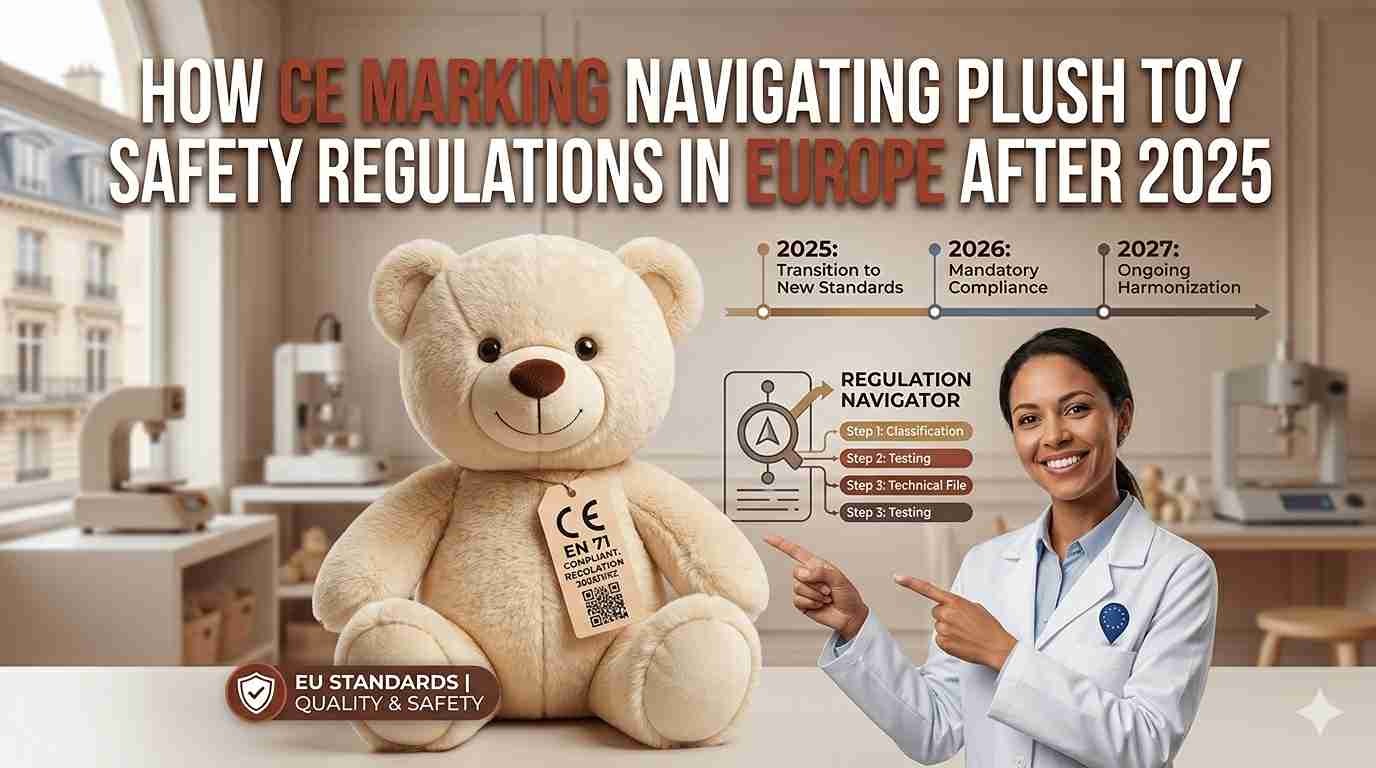
Do you think of starting a plush toy business in Europe? If so, then you need to follow all the safety rules and regulations for the protection of the children. After 2025, many brands will be confused with these two important marks: CE Marking and UKCA Marking. Whenever you see or hear about them, you think that
- Are they both the same?
- Do we need both?
- What has changed after Brexit?
In this blog, we explain everything, so you can clearly understand how to sell plush toys in Europe and the USA.
WHAT IS CE MARKING and Why Is It Important?
First of all, we know that CE Marking is a safety mark in the European Union (EU). If your plush toy has a CE mark, it means that it is fully approved by the EU. It is fully safe for children. And also, it meets EU safety laws. It is important to know where CE is needed. CE Marking is required in all European countries (like Germany, France, Italy). And some other markets that follow EU rules.
What Does CE Cover Mean?
For plush toys, CE marking includes mechanical safety and chemical safety, flammability (material should not burn easily), and hygiene and cleanliness.
Top Safety Standards For Plush Toys
A recent report about the EU plush industry clarifies that there is nothing much changed in plush toy safety standards according to the CE marking. It relies on similar safety standards. The main standard is: EN71 (European Toy Safety Standard), which includes: EN71-1: Mechanical and physical safety, EN71-2: Flammability, EN71-3: Chemical safety. For plush toys, this means your toy has safe stitching, no loose parts, uses fire-resistant fabric, non toxic material.
Major Testing Requirements For CE Marking
Before you sell your plush toys, you must test it from an approved testing lab. Test report showing compliance. You have to provide your documents to concern authorities. For CE, you must create a Declaration of Conformity. This documentation proves that your product is safe.
Labeling Requirements
Labeling is one of the most important parts of any toy production. CE requires proper labeling on toys. They make sure that your plush toy or packaging must include CE marking. The manufacturer’s proper address, name, email, product details, and age warnings, if needed.
Don’t make these Mistakes While Manufacturing CE Type Products
Many businesses make these common mistakes while manufacturing CE products, which can cause problems later. You always need to update for new laws and regulations. Don’t use wrong labels; missing reports may cause custom delays. Most importantly, you must test your product. Don’t use fake reports. If you don’t make these common mistakes, you create a good impact and save yourself from problematic situations.
Top Tips for EU Plush Toy Importers and Brands
To avoid mishappenings, always work with authentic manufacturers because they know and understand the CE laws and rules. Always test your product properly. It can help you to save you from any disaster that can affect mass production later. Always prepare your documents because customs and authorities require them at any time or any stage. If you want to grow, plan for the market (CE). So, prepare yourself for any systems in the future to avoid future costs.
Conclusion
In the last few years, we have known that the plush toy market is now becoming a large market. Different countries and regions introduce their policies and rules for this business. Like the EU and the USA, they both have their laws and rules for plush toys. CE is for the European Union and is for better and smarter growth. You need to follow market rules. Make sure to always try to apply safety standards. Always have proper documentation. Don’t use fake reports; it may harm your business later. Once you understand the compliance, it becomes much easier. And remember: safe toys mean happy customers and a strong, trusted brand.