
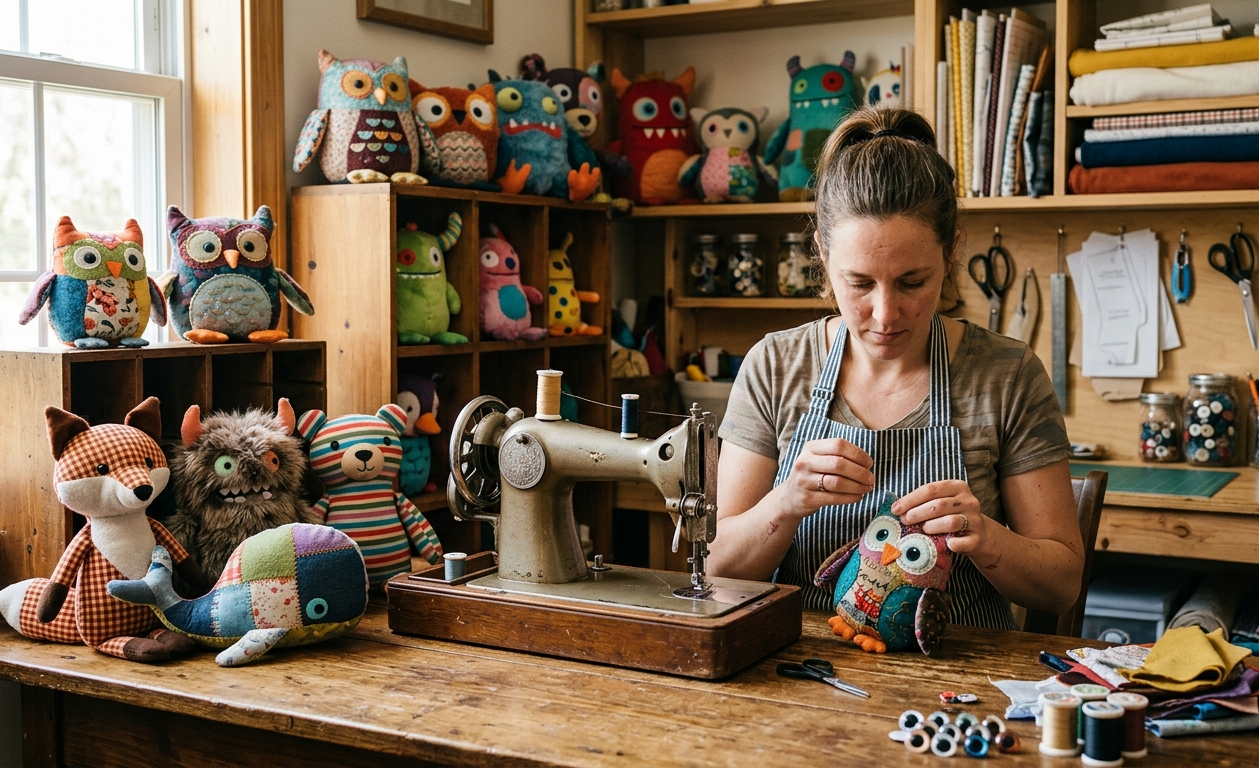
Sí: la fabricación de peluches personalizados en lotes pequeños no solo es posible, sino que es uno de los sectores de más rápido crecimiento dentro de la industria de los peluches, impulsado en gran medida por creadores de Kickstarter, artistas independientes y pequeñas marcas que quieren probar un personaje antes de comprometerse a fabricar miles de unidades. La verdadera pregunta no es si Se puede hacer, pero cuánto cuesta, lo “pequeño” que es realmente «pequeño», y ¿Qué ventajas e inconvenientes conlleva una cantidad mínima de pedido (MOQ) más baja?. A continuación te explicamos cómo hacerlo Fabricación de peluches personalizados en lotes pequeños funciona realmente en la práctica.
Respuesta rápida
Sí, es posible fabricar peluches personalizados en lotes pequeños, con cantidades mínimas habituales que oscilan entre 50 y 100 unidades en fábricas especializadas en pedidos con cantidades mínimas reducidas (MOQ), aunque algunas fábricas estándar de exportación siguen exigiendo entre 300 y 1.000 unidades. Los costes por unidad son considerablemente más elevados en volúmenes reducidos, ya que los costes de puesta a punto (diseño de patrones, digitalización de bordados, calibración de la maquinaria) son fijos independientemente del tamaño del pedido: la misma mano de obra que cuesta $0,10 por unidad en un pedido de 5.000 unidades puede suponer $10 o más por unidad en un pedido de 50 unidades. Las tiradas pequeñas son más adecuadas para validar un diseño o financiar un lanzamiento, no para alcanzar el menor coste unitario posible.
Por qué existe el MOQ, en primer lugar
La cantidad mínima de pedido no es una cifra arbitraria que sirva para restringir el acceso, sino que refleja la estructura real de costes —en gran medida fijos— de la producción de peluches. Antes de coser ni un solo peluche, una fábrica tiene que llevar a cabo varios pasos de preparación que cuestan más o menos lo mismo, tanto si el pedido es de 50 unidades como de 5.000:
- Ingeniería de patrones — convertir un diseño en 2D en un patrón en 3D apto para el corte, calculando las pinzas y los refuerzos
- Digitalización mecánica — programación de máquinas de bordar con un “mapa de puntadas” para los detalles faciales y los logotipos
- Abastecimiento de materiales — garantizar que los tejidos, los hilos y los componentes de seguridad se ajusten a los colores Pantone
- Calibración de la línea — máquinas de reenhebrado: ajuste de la tensión y la presión para adaptarse al nuevo gramaje del tejido
Si ese trabajo de preparación supone aproximadamente $500 en mano de obra, repartirlo entre 5.000 unidades añade unos $0,10 por juguete. Si se reparten esos mismos $500 entre 50 unidades, el coste por juguete asciende a aproximadamente $10. Esa simple dinámica es la razón por la que los peluches fabricados en lotes pequeños cuestan mucho más por unidad que un pedido al por mayor comparable: es una cuestión de matemáticas, no de margen de beneficio.
¿Hasta qué punto puede ser realmente “pequeño” un «lote pequeño»?
La respuesta sincera depende del tipo de fabricante con el que trabajes:
- Fábricas de exportación estándar (que suelen tener su sede en China o Vietnam) suelen fijar cantidades mínimas de pedido (MOQ) de entre 300 y más de 1.000 unidades por referencia, ya que su modelo de negocio se basa en la eficiencia por volumen.
- Fábricas especializadas en peluches con un pedido mínimo reducido cada vez más, ofrecen opciones de entrada en el mercado en lotes de entre 50 y 100 unidades, utilizando tejidos de su propio stock y líneas de producción específicas para lotes pequeños, con el fin de que la carga que supone la puesta en marcha sea asumible.
- Talleres nacionales de confección y fabricantes artesanales (en EE. UU., el Reino Unido o algunas zonas del sudeste asiático) pueden ser inferiores a 100 unidades, a veces incluso tiradas personalizadas de un solo dígito, pero a un precio unitario considerablemente más elevado —a menudo entre $20 y $80 o más, dependiendo del tamaño y la complejidad—.
- Plataformas de agregación de pedidos A veces agrupan los pedidos de varios compradores para alcanzar el mínimo establecido por la fábrica, lo que permite que un comprador individual realice un pedido de entre 50 y 100 unidades, mientras que la plataforma consolida una tirada de producción combinada mayor.
¿Qué determina el umbral mínimo real del pedido mínimo (MOQ)?
Incluso una fábrica dispuesta a producir lotes muy pequeños se enfrenta a límites estrictos impuestos por su propia cadena de suministro, y no solo por su propia capacidad:
- Lotes de tintes personalizados para tejidos. Una tina de teñido de tela a medida suele tener un rendimiento mínimo de entre 1.000 y 1.500 yardas, aproximadamente. Si tu pedido de 50 unidades solo requiere 10 yardas, la fábrica tiene que comprar —y almacenar— el resto como stock muerto, por lo que los colores de tela totalmente personalizados son una de las cosas más difíciles de conseguir en volúmenes muy reducidos.
- Cantidades mínimas de los proveedores de componentes. Los ojos de seguridad, las etiquetas colgantes, los módulos de sonido y otros componentes adicionales tienen cada uno su propio pedido mínimo (MOQ) por proveedor. Un chip de sonido cosido, por ejemplo, puede requerir que su propio proveedor produzca un lote mínimo de entre 500 y 1.000 unidades, lo que establece un mínimo para el MOQ de tu juguete terminado, independientemente de la capacidad de la propia línea de costura.
- Tiempo de cambio de línea. Cada vez que una línea de producción cambia de un diseño a otro, es necesario volver a enhebrar y recalibrar las máquinas para adaptarlas al nuevo tejido y patrón. Ese tiempo de inactividad supone un coste real que la fábrica tiene que recuperar de alguna manera, lo que explica en parte por qué el precio por unidad, cuando los volúmenes son bajos, sigue siendo elevado incluso en fábricas con un “pedido mínimo bajo”.
En resumen: en un diseño con múltiples componentes personalizados, el MOQ viene determinado, en la práctica, por el componente de la cadena que resulte más difícil de adquirir en pequeñas cantidades, y no por la capacidad de confección de la propia fábrica de peluches.
Cómo es realmente el proceso de producción en lotes pequeños
Independientemente del volumen del pedido, la fabricación de peluches personalizados en lotes pequeños suele seguir el mismo proceso básico:
- Diseño y presupuesto. Envía bocetos, imágenes de referencia o un dossier técnico; la fábrica te facilitará un presupuesto en función del tamaño, la complejidad, los materiales y la cantidad prevista.
- Creación de prototipos. Se elabora una muestra física para su aprobación; el plazo suele oscilar entre $80 y $300 y tarda aproximadamente entre 5 y 10 días. La mayoría de las fábricas consideran esta tarifa como un depósito reembolsable en concepto de I+D, que se devuelve una vez que el pedido al por mayor alcanza la cantidad mínima de pedido (MOQ) acordada.
- Producción en lotes reducidos. Una vez aprobada la muestra, la fábrica produce el diseño aprobado en la cantidad reducida acordada.
- Control de calidad y envíos. Incluso las tiradas pequeñas se someten a los mismos controles básicos de calidad —ensayo de tracción, detección de metales, inspección visual— antes de su envío.
Los plazos realistas totales para una primera producción en lotes pequeños suelen oscilar entre dos y seis semanas tras la aprobación de la muestra, aunque el abastecimiento de materiales y las pruebas de conformidad pueden alargar ese plazo.
Cuándo tiene sentido producir en lotes pequeños
La producción con un volumen mínimo de pedido (MOQ) reducido es una opción realmente adecuada para:
- Campañas de financiación colectiva utilizando una tirada pequeña como Patrocinador de Kickstarter recompensas o incentivos por reserva anticipada antes de comprometerse a realizar un pedido completo al por menor
- Nuevas marcas o personajes validar la demanda del mercado antes de pasar a una tirada de producción de entre 500 y 5.000 unidades
- Ediciones limitadas relacionado con una convención, una caída estacional o un evento
- Artistas independientes y pequeños estudios que no disponen de la liquidez necesaria para inmovilizar capital en un pedido de existencias de gran volumen
El consejo generalizado en todo el sector es considerar una tirada pequeña como una herramienta de validación del mercado, y no como una vía para alcanzar los costes unitarios más bajos posibles: una tirada de 50 unidades sirve para responder a la pregunta “¿se vende esto?”, y el coste unitario solo resulta competitivo una vez que el diseño se escala a cientos o a unos pocos miles de unidades.
Consejos para reducir los costes de las series pequeñas
- Utilizar los colores de las telas que hay en stock en lugar de un lote de tinte totalmente personalizado, lo que permite evitar por completo el pedido mínimo de más de 1.000 yardas.
- En la primera pasada, omite los componentes electrónicos y los módulos de sonido. Estos componentes tienen sus propios volúmenes mínimos de pedido por parte de los proveedores y suponen un riesgo de ingeniería; un diseño sencillo y bien elaborado avanza más rápido por la línea de producción con menos riesgo de defectos.
- Confirma las condiciones de reembolso de tu cuota de muestra — La mayoría de las fábricas de prestigio deducen el coste del prototipo de la factura final una vez que se alcanza la cantidad mínima de pedido (MOQ) acordada, así que infórmate al respecto antes de pagar la tarifa de la muestra.
- Pregunta qué pasa si quieres ampliar la escala. Una fábrica capaz de pasar de una tirada de validación de 50 unidades a un pedido de producción de 500 o 5.000 unidades sin tener que volver a empezar con el utillaje y la puesta a punto suele ser un socio más sólido a largo plazo que uno que ofrezca un pedido mínimo (MOQ) bajo como caso puntual.
Preguntas frecuentes
¿Cuál es la cantidad mínima de pedido (MOQ) disponible para los peluches personalizados?
Algunas fábricas especializadas ofrecen ahora pedidos mínimos de tan solo 50 unidades, sobre todo cuando se utiliza tejido de stock propio en lugar de un color totalmente personalizado. Las fábricas estándar de exportación suelen exigir entre 300 y más de 1.000 unidades.
¿Por qué el coste unitario es tanto más elevado en los lotes pequeños?
Esto se debe a que los costes de puesta en marcha —diseño de patrones, digitalización de bordados y calibración de máquinas— son fijos, independientemente del volumen del pedido. Repartir ese coste fijo entre un número menor de unidades encarece considerablemente el precio por juguete.
¿Puedo añadir un chip de sonido o componentes electrónicos a un peluche fabricado en series pequeñas?
A veces, pero los componentes electrónicos suelen tener sus propios mínimos de pedido por parte del proveedor (a menudo entre 500 y 1.000 unidades), lo que puede fijar un MOQ efectivo más alto para el juguete en su conjunto, aunque la propia línea de confección pudiera gestionar una tirada más pequeña.
¿Es necesario solicitar una muestra antes de realizar un pedido de lotes pequeños?
Sí, prácticamente todos los fabricantes exigen la aprobación de un prototipo antes de la producción en serie, normalmente a cambio de una tarifa de entre $80 y $300, que suele reembolsarse una vez que el pedido alcanza la cantidad mínima de pedido (MOQ) acordada.