
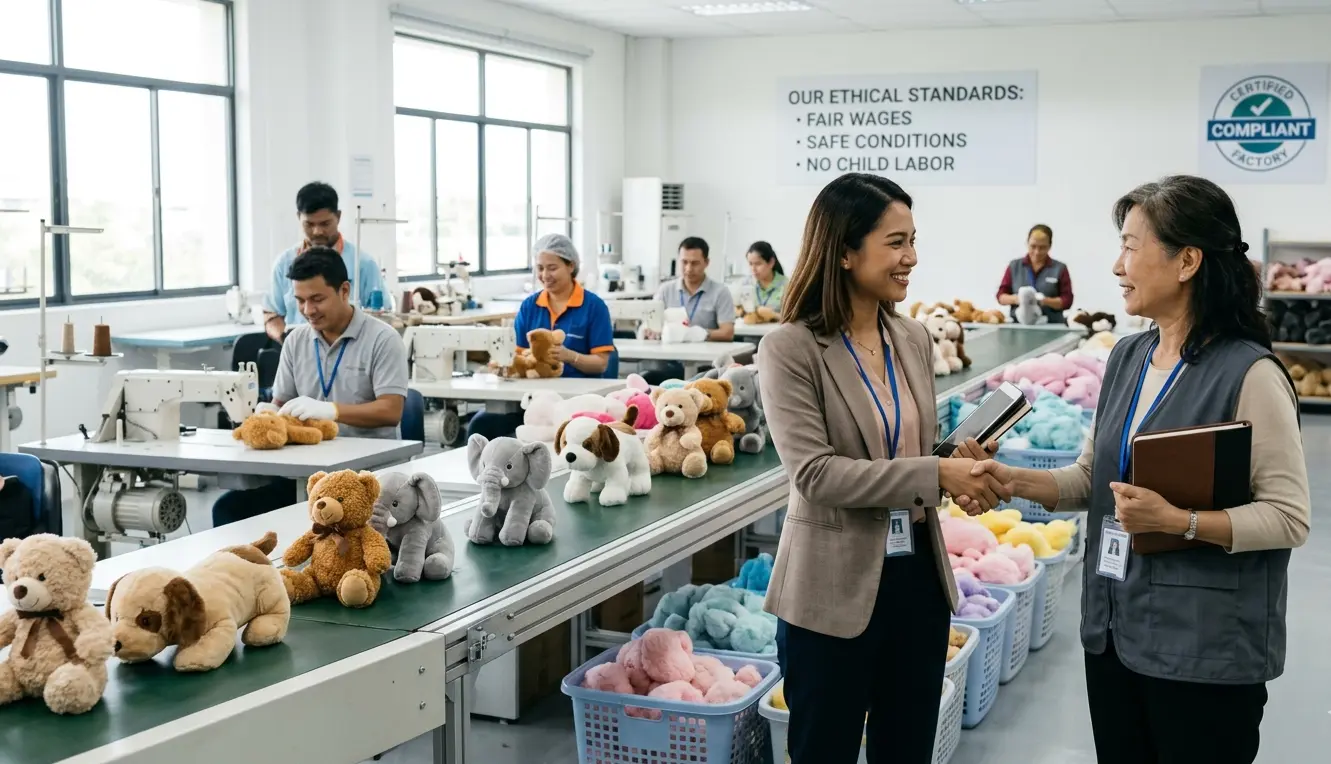
In 2026, businesses are no longer only focused on profit; they have become an organized and manageable ethical industry. This industry not only sees the prize but also measures sustainability and responsibility. When specifically talking about plush toy manufacturing, it is completely dependent on this thing. Partnering with an ethical plush toy factory is not just a branding decision; it is a strategic move. This move impacts compliance, customer trust, and long-term profitability.
Understand How Plush Toy Sourcing Becomes Ethical
In today’s economy, many US and EU businesses ensure that companies practice ethical manufacturing and sourcing. This thing involves fair labor practices. It’s an environmental responsibility to work with the BSCI regulations. A toy manufacturer’s audit provides complete assurance to its buyers to make them aware of international compliance standards. It also evaluates:
- Workforce, workplace safety, and eco-friendliness.
- And it reduces reputational risks for B2B buyers.
A research study shows that in North America and Europe, the companies that follow ethical sourcing are in a better position to meet the retailer’s requirements. Moreover, they follow compliance checks strictly.
Why Ethical Sourcing is Important in 2026?
Ethical sourcing is important in these ways:
- It reduces the risks of reputational damage to the company, and it enhances brand reputation.
- It also shows the transparency between the company and the supply chain.
- Moreover, it complies with local and global laws.
All these things help in reducing the risk of legal damage.
How The Demand of Sustainable Materials Increases?
Sustainability is rapidly reshaping the products. One of the fastest reshifts is recycling the material in plush products. AGRS-certified recycled plush product guarantees that materials are traceable, recycled, and processed under strict environmental and social criteria. This certificate creates clear claims from companies that they play a vital role in sustainability without the risk of greenwashing. From recycled polyesters to eco-friendly dyeing, it gives the companies confidence that they contribute to the environment without any harsh materials. It has a lower environmental impact.
Cost, Speed, and Logistics
Shipping is traditionally between cost and speed. Two main sources, sea freight and air freight, are commonly used in plush toy supplies. However, both have some advantages and disadvantages.
If we talk about sea freight, it delays inventory, and on the other hand, air freight is fast but significantly increases carbon emissions. This is more dangerous for the sustainable environment. How to manage the situation that can reduce the risk of unsustainability,y and also manage the cost.
Sea-Air Hybrid Shipping: A Smarter Middle Ground Approach
If we talk about these two transport sources, both are used for logistic purposes. Goods are shipped by sea for the majority of the journey and then transferred to air freight for the final leg. This approach gives many advantages. Some are mentioned below:
Reduced Carbon Footprint
Carbon emissions are a high risk to the safe environment and also cost a lot. To reduce the risk of carbon footprint, we use alternative logistic sources to manage this risk. Hybrid shipping is lowering the risk and making it a more environmentally responsible choice.
Faster Speed Than Sea Freight
By cutting transit time at critical points, businesses can receive inventory weeks earlier than traditional sea routes.
Cost Efficiency
Air freight is a bit more expensive than sea freight, so it is better to use both sources rather than full air freight. Striking a balance between budget and urgency.
Inventory Optimization
For B2B buyers managing seasonal demand or retail deadlines, hybrid shipping helps maintain stock availability without over-reliance on high-emission transport.
Optimizing Bulk Orders
Imagine a retailer preparing for a holiday season launch. Ordering entirely via sea freight risks delays, while air shipping the entire order inflates costs and emissions.
A smarter strategy would be:
- Ship the bulk of inventory via sea freight
- Use sea-air hybrid shipping for priority SKUs
- Reserve limited air freight for urgent replenishment
This layered logistics approach ensures product availability while maintaining sustainability goals.
Understanding Carbon-Neutral Toy Shipping
As we all know, shipping is one of the biggest causes of pollution, so companies are now moving towards carbon-neutral toy shipping for safe trade, reducing carbon emissions, and using green projects to lower the risk factors. Through the green planting program and Renewable energy projects. These types of initiatives help to maintain the environment.
Sea Air Strategy
To manage sustainability, use the sea-air in both transport strategies to balance value and pace. The sea air hybrid is mix strategy which manage time, cost, and environment too.
- Sea freight (slow but low cost and low emissions)
- Air freight (fast but expensive and higher emissions)
Goods travel first by sea, then by air for the final part of the journey. Sea transport produces less pollution in enviromentbas compare to air freight. It improves delivery time. Sea shipping: 30–45 days, and Sea-air hybrid: 15–25 days. This faster delivery helps businesses respond quickly to demand, especially for trending products.
Better Inventory Management: Businesses can divide shipments like this:
- Bulk stock via sea freight
- Medium urgency stock via sea-air
- Urgent stock via air
This method helps:
- Avoid stock shortages
- Reduce overstock
- Improve cash flow
Simple Example: A company sourcing from an ethical plush toy factory can use this strategy:
- 50% goods shipped by sea (low cost)
- 30% by sea-air (balanced option)
- 20% by air (urgent demand)
Result:
- Products arrive on time
- Lower shipping cost
- Reduced environmental impact
Why This Matters for B2B Buyers
Combining ethical manufacturing with smart logistics gives a strong advantage.
When you:
- Work with a BSCI audited toy manufacturer
- Use GRS-certified recycled plush
- Build a sustainable toy supply chain in the USA
- Apply carbon-neutral toy shipping
- Use sea-air hybrid logistics
You create a business that is:
- Responsible
- Efficient
- Future-ready
Fazit
The plush toy industry is growing very fast, so this industry faces some ethical and environmental problems. Buyers want more than a product; they want ethical and green logistics. Choosing an ethical plush toy factory ensures safe and fair manufacturing. Working with a BSCI-audited toy manufacturer and using GRS-certified recycled plush supports sustainability. Building a sustainable toy supply chain in the USA and using carbon-neutral toy shipping helps protect the environment. So, a change in perspective and strategy also contributes to the environment.