
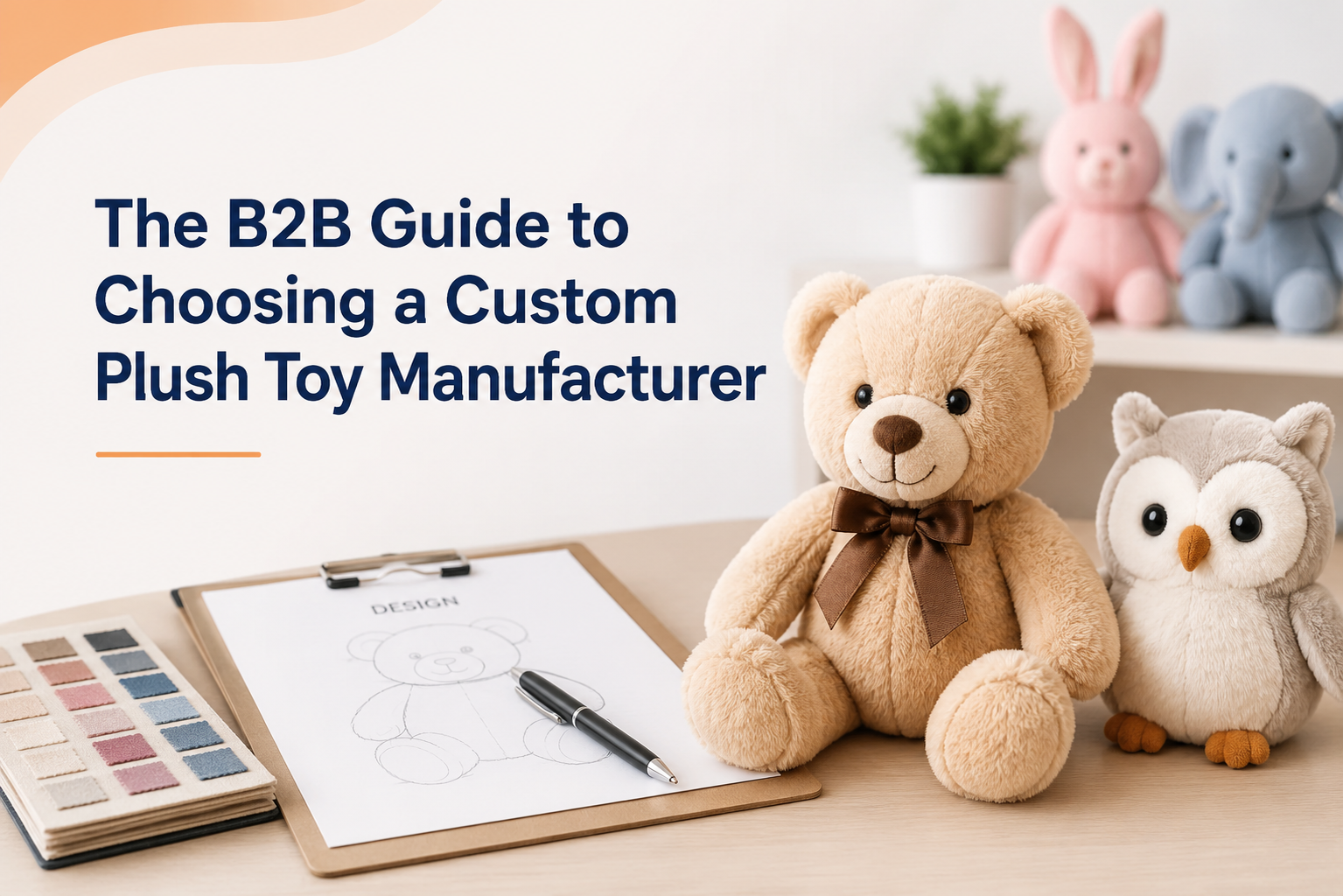
Un fabricante de peluches a medida es una fábrica que convierte tu diseño en un peluche acabado y sometido a pruebas de seguridad. Se encarga del patrón, los materiales, el utillaje y la producción en serie. Un agente comercial no realiza nada de eso internamente. Compra tu pedido y lo subcontrata. Esa única diferencia determina la calidad, el precio y quién se hace responsable en caso de defecto.
¿Alguna vez has tenido en las manos una muestra que no se parecía en nada a tu ficha de diseño? Entonces ya sabes lo difícil que es este negocio. El diseño es fácil. El verdadero trabajo consiste en convertir un dibujo plano en algo que un niño pequeño pueda tirar de un tirón y que, aun así, supere las pruebas de laboratorio. He pasado unos diez años en las plantas de producción de Guangdong, dando el visto bueno a una muestra tras otra. Esto es lo que he aprendido: la fábrica que elijas determina en gran medida el resultado final. Y eso ocurre antes incluso de que se corte un solo rollo de tela.
Piensa en esto como el punto central. Aquí se explica qué diferencia a un fabricante de un intermediario. Se explica cómo se elabora realmente un presupuesto y qué hay que comprobar antes de realizar una transferencia para abonar un anticipo. Para profundizar más, te iré remitiendo a las guías temáticas a medida que avancemos: Gestión de la cantidad mínima de pedido (MOQ), Modelos OEM frente a ODM, el proceso de muestreo, y plazos de entrega realistas.
Fabricante frente a proveedor: por qué esta distinción te cuesta dinero
Esta es la suposición que más les cuesta a las nuevas marcas. Creen que una página web elegante significa que hay una fábrica de verdad. A menudo no es así. Una empresa comercial compra tu pedido y le aplica un margen de beneficio, normalmente del 15 al 30 por ciento. A continuación, subcontrata el trabajo a una fábrica que nunca llegarás a ver. Aparece un defecto. El agente no puede arreglar la línea de producción y no asumirá el coste de la reelaboración. Y tú te ves obligado a negociar algo que ni siquiera puedes supervisar.
Un directo fabricante de peluches a medida Es dueño de la nave. Las mesas de corte, las líneas de costura, las máquinas de relleno, la mesa de control de calidad. Esa propiedad es la razón por la que una fábrica directa ofrece mejores precios y resuelve los problemas más rápido. Analizamos en detalle todas las ventajas e inconvenientes en nuestro Proveedor de peluches frente a fabricante Comparación. La regla general es sencilla: salvo que se trate de un regalo puntual, compra directamente al fabricante.
| Criterios | Fabricante directo | Empresa comercial / Agente |
| Cuenta con una línea de producción propia | Sí — control total | No — subcontrata |
| Precio unitario habitual | Mínimo por volumen | +15–30%: formato |
| Acceso a la auditoría de fábrica | Abierto a visitas | A menudo restringido |
| Responsabilidad por los defectos | Directo, inmediato | Indirecto, lento |
| Ideal para | Pedidos al por mayor y recurrentes | Pequeñas compras puntuales |
| Documentación relativa al cumplimiento normativo | Emitido internamente | Pasé por... |
Cómo se calculan realmente los precios de los peluches personalizados
A los compradores les encanta pedir “tu mejor precio” antes incluso de haber enviado un solo pliego de condiciones. Es al revés. Un presupuesto detallado se elabora a partir de una serie de factores que influyen en el coste. Una vez que los identificas, puedes centrarte en aquellos que realmente influyen en el precio final. A continuación te explicamos cómo se calcula realmente el coste unitario de una fábrica.
- Coste de los materiales. Esto depende del tejido y del relleno. Los tejidos más suaves y de pelo más largo son más caros. Lo mismo ocurre con los rellenos más densos.
- Trabajo y complejidad. Cada costura adicional supone unos minutos más de costura. Una forma redonda sencilla es barata. Una figura articulada con dedos, en cambio, no lo es.
- Herramientas y configuración. Los troqueles y la digitalización son gastos únicos. Se reparten entre toda la tirada, por lo que los volúmenes más grandes reducen el precio por unidad.
- Volumen de pedidos. Esta es la palanca más importante. Duplicar la cantidad rara vez duplica el coste. ¿Estás probando una nueva referencia? Fíjate en cómo lo gestionan las fábricas tiradas con un pedido mínimo reducido, de entre 100 y 500 unidades.
- Pruebas de conformidad. Las tarifas de laboratorio para las normas ASTM F963 o EN 71 se cobran por diseño, no por unidad.
¿Prefieres un presupuesto detallado en lugar de una cantidad global poco clara? Nuestro proceso de pedido En esta página se explica lo que una fábrica necesita de ti. Si se lo proporcionas, obtendrás un precio justo desde el primer momento. Así evitarás que te ofrezcan un precio bajo que luego vaya subiendo poco a poco.
El proceso de fabricación de peluches personalizados, paso a paso
Una buena fábrica trabaja siguiendo una secuencia establecida. Si te saltas una fase, corres el riesgo de obtener un lote defectuoso. Hay ocho puntos de control, y hay que dar el visto bueno a cada uno de ellos antes de que se transfiera más dinero. Se empieza con la revisión del diseño, en la que la fábrica señala todo aquello que no se pueda coser. A continuación viene la confección de los patrones y la adquisición de los tejidos. Después, el muestra de preproducción. Esa es la fase decisiva. Una vez que lo apruebes y pagues el anticipo, comienzan el corte y la costura a gran escala. A continuación, se procede al relleno y al acabado. Después, se realizan el control de calidad y las pruebas de conformidad. El proceso concluye con el embalaje y el envío.
Lo representamos todo en nuestro proceso de producción página. ¿Quieres ver cada estación en funcionamiento? Nuestra guía paso a paso de Cómo se fabrican los peluches, desde el diseño hasta el envío te lleva hasta el final.
Cómo evaluar una fábrica antes de comprometerte
La diligencia debida distingue a las marcas que siguen haciendo pedidos durante años de aquellas que salen mal paradas y abandonan. Antes de realizar un depósito, comprueba los seis puntos que figuran en la tabla siguiente. He utilizado esta misma lista de comprobación para descartar fábricas que, sobre el papel, parecían impecables. Nunca me he arrepentido ni una sola vez de haber sido precavido.
| Punto de control | Qué pedir | Bandera roja |
| Titularidad | Licencia comercial + dirección de la fábrica | Se niega a hacer un recorrido en vídeo |
| Cumplimiento normativo | Informes recientes de ensayos según las normas ASTM/EN 71 | “Podemos superar cualquier prueba”, sin documentación |
| Muestras | Muestra de preproducción pagada | Solo se ofrecen fotos de archivo |
| Auditorías | Certificados Sedex, BSCI e ISO 9001 | No hay antecedentes de auditorías sociales |
| Capacidad | Producción mensual y número de líneas | Cifras imprecisas o evasivas |
| Referencias | Dos clientes actuales del sector B2B | No se me ocurre ni uno solo |
Elegir al socio adecuado merece un análisis en profundidad. Nuestra guía para Cómo elegir una fábrica de peluches de confianza en China abarca los grupos regionales y los tipos de auditoría. También aborda los hábitos de comunicación que, sin que te des cuenta, te indican con quién estás tratando. Puedes consultar nuestras credenciales y nuestras instalaciones en la Quiénes somos página.
Cómo elegir tu modelo de producción
No todas las marcas necesitan el mismo tipo de relación. Si llegas con diseños terminados que solo hay que fabricar, lo que necesitas es un OEM. ¿Necesitas que el equipo de la fábrica desarrolle el personaje a partir de unas indicaciones generales? Eso es un ODM. La elección determina tus costes, tus plazos y quién acabará siendo el titular de la propiedad intelectual. Comparamos ambas opciones en nuestroGuía sobre la fabricación OEM frente a ODM. Sea cual sea tu postura, asegúrate de que se firme un acuerdo de confidencialidad antes de enviar ni un solo archivo.
Materiales y construcción: lo que determina la calidad
Dos peluches pueden compartir el mismo diseño y, sin embargo, dar la sensación de ser productos diferentes al tocarlos. La diferencia radica en la rigurosidad de la fabricación. Eso es algo que un verdadero fabricante controla y que un intermediario rara vez comprueba. Por eso, cuando compares presupuestos, compara la misma calidad de fabricación. No te limites a comparar la misma imagen.
| Componente | Elección de presupuesto | Selección Premium | Impacto |
| Tejido exterior | Velboa de pelo corto | Minky / piel sintética de pelo largo | Textura suave y atractivo visual en el punto de venta |
| Relleno | Algodón PP estándar | Algodón de PP siliconado de grado A | Ángulo de salida, resistencia, peso |
| Ojos / nariz | Bordado | Ojos de seguridad certificados | Apariencia frente a seguridad por grupos de edad |
| Costuras | De una sola puntada | Punto de doble cierre | Resistencia a la tracción |
| Acabado superficial | Novio básico | Arreglado y recortado a mano | Valor percibido |
Una herramienta que te permita definir cada fila y que, a continuación, te muestre las ventajas e inconvenientes en un ejemplo real es una herramienta que vale la pena conservar. Explora las opciones en nuestratejidos habituales página, junto con el resultado final peluches y accesorios Nosotros también fabricamos. Así, en tu dossier técnico podrás detallar exactamente el diseño que deseas. Si aciertas con estas decisiones, conseguirás un peluche que se venda a un precio superior, y no uno que acabe en el estante de las rebajas.
Tres errores que más caro salen a los nuevos compradores
Siguen repitiéndose los mismos errores evitables. Si evitas estos tres, irás por delante de la mayoría de los importadores novatos. Error número uno: buscar a ciegas la cotización más baja. El precio más barato suele ocultar tejidos de menor calidad o pruebas omitidas. Compara la calidad de fabricación, no el precio total. Error número dos: prescindir de la muestra de pago. Si apruebas el pedido a granel basándote solo en fotos, es posible que te encuentres con un contenedor de felpa que “se parece bastante” a lo que esperabas. Firma siempre la aceptación de una muestra física muestra dorada En cambio. Error número tres: subestimar los plazos. La producción y el transporte marítimo duran unos dos meses. Planifícalo con antelación con nuestra Guía de plazos de entrega. Así no tendrás que enviar por transporte aéreo un equipo de rescate que cuesta cinco veces más.
Preguntas frecuentes
¿Cuál es el pedido mínimo para un fabricante de peluches personalizados?
La mayoría de las fábricas establecen cantidades mínimas de pedido (MOQ) de entre 300 y 1.000 unidades por diseño. Los socios más flexibles pueden fabricar lotes piloto de entre 100 y 500 unidades. Los volúmenes más reducidos suponen un mayor coste por unidad, ya que los gastos de utillaje y puesta a punto se reparten entre un número menor de piezas. Nuestro Guía para pedidos con un volumen mínimo reducido tiene el desglose completo.
¿Cuánto tiempo lleva la fabricación de peluches personalizados?
Desde la aprobación de la muestra hasta el envío, hay que contar con un plazo de entre 25 y 45 días para la producción en serie. Hay que añadir entre 7 y 15 días más para la elaboración previa de muestras. Nuestro Guía de plazos de entrega asigna cada etapa al calendario.
¿Puede un fabricante encargarse de garantizar el cumplimiento de las normas de seguridad en mi nombre?
Sí. Un servicio integral fábrica de peluches personalizados Coordina los ensayos de laboratorio según las normas ASTM F963, EN 71 y CPSIA. Emite los certificados que necesitas para vender legalmente en tu mercado. Solo tienes que confirmar que los ensayos se realizan según el diseño y entregar los informes originales.
Sobre el autor
Jack es un especialista en el abastecimiento y la fabricación de peluches con más de una década de experiencia práctica en la gestión de la producción a medida en fábricas chinas. Ha supervisado miles de muestras de preproducción y tiradas a gran escala para marcas minoristas, titulares de licencias y empresas emergentes, y escribe para ayudar a los compradores B2B a abastecerse de forma más inteligente. Ponte en contacto con el equipo a través de la plushtoys-factory.com Contacto y proceso de pedido.