
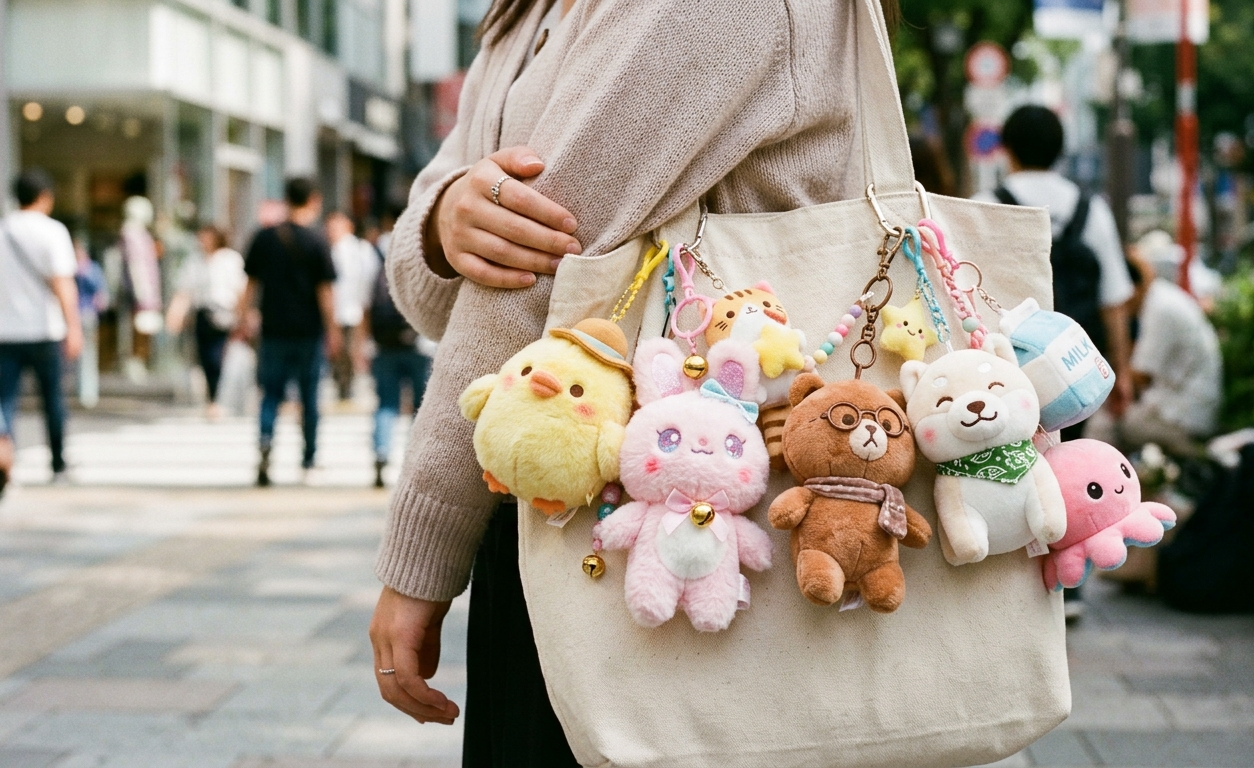
Bag charms have gone from a niche accessory to a full-blown fashion statement, and kawaii plush keychains are leading the charge. Walk through any city street, scroll any “what’s in my bag” video, or browse a fashion runway recap, and you’ll spot the same thing: soft, round, big-eyed characters clipped to totes, backpacks, and even designer handbags. What began as a playful nod to Japanese cute culture has become one of 2026’s defining style movements, blending fashion, nostalgia, and collectibility into a single tiny accessory.
This guide breaks down why kawaii plush keychains are everywhere this year, what design and market trends are shaping the category, and how to choose (or source) a bag charm that actually holds up.
Why Kawaii Plush Keychains Are Booming in 2026
A few forces are converging to push this category to new heights:
Bag charms became fashion, not an afterthought. Personalizing a plain tote or backpack with a soft character is now considered a legitimate styling choice rather than a childish add-on. Fashion editors have noted that texture-driven charms and playful plush pieces are showing up on runways and street-style feeds alike, moving bag charms well beyond the “quirky keychain” category they used to occupy.
Social platforms reward small, filmable products. Mini plush and bag charms are easy to unbox, easy to gift, and cheap enough to trigger impulse purchases. Pinterest search interest in bag charms has reportedly grown several hundred percent in the past year, and short-form video hashtags around bag decorating continue to climb, which keeps the trend cycle turning fast.
The “kidult” shift is real. Adults now make up a meaningful share of plush and collectible toy buyers, driven by nostalgia, stress relief, and a desire for playful self-expression. Clipping a soft character to a work bag or laptop sleeve has become a quiet way for adults to signal personality without saying a word.
Low cost, high impulse appeal. Compared to full-size plush or apparel, a keychain-sized charm is inexpensive to produce and ship, which makes it an easy add-on purchase for brands and a low-risk buy for consumers — a big reason the category keeps expanding even as broader retail spending tightens.
What “Kawaii” Actually Means in Design Terms
Kawaii isn’t just a vibe — it follows fairly consistent visual rules that separate a genuinely cute plush from a generic one:
- Rounded silhouettes with no sharp edges or angular seams
- Oversized heads relative to the body, which reads as youthful and endearing
- Simple, minimal facial features — small dot eyes, a subtle mouth, sometimes blushed cheeks
- Soft, pastel, or warm color palettes rather than bold, saturated tones
- A gentle, friendly expression that avoids anything too exaggerated or cartoonish
These cues matter whether you’re a shopper trying to judge quality from a product photo or a brand developing a new character. Get the proportions right and a three-inch charm feels irresistibly cute; miss them and it just looks like a cheap stuffed toy.
The Bag Charm Formats Everyone’s Buying
“Keychain” now covers a whole family of attachment styles, each suited to different bags and uses:
- Clip-on plush with a lobster clasp or carabiner — the most versatile option, easy to move between bags
- Ring keychains — classic, secure, and good for actual keys as well as bags
- Snap-tab bag charms — flat-back designs that clip directly onto zipper pulls or straps
- Motion or pull-string versions — a novelty layer that adds interactivity for younger buyers or collectors
- Textured and fur-stole-style charms — a newer 2026 trend pairing plush with fluffy trims, ribbons, or fabric wraps for a more “elevated” look on premium bags
Hardware choice isn’t cosmetic — it affects durability. A charm’s clasp needs to be secure, appropriately sized for the plush’s weight, and, where relevant, meet child-safety standards so it doesn’t detach or pose a choking hazard.
Five Trends Defining Bag Charms in 2026
- Oversized characters on small bags. Pairing a chunky, oversized plush with a compact bag creates visual contrast that performs well on camera and in person.
- Texture over novelty. Fuzzy, fur-like finishes and mixed-material charms (plush plus ribbon, chain, or fabric) are edging out purely “cute for cute’s sake” designs, giving charms a more fashion-forward feel.
- Licensed and collab drops. Established characters — from Sanrio’s roster to regional mascots — continue to dominate sales, since built-in fandom drives faster impulse buys than unknown originals.
- Comfort-coded characters. Round, sleepy-looking animals (think capybara-style calm creatures) are trending alongside classic kawaii faces, reflecting a broader “comfort aesthetic” moving through the plush market.
- Personalization. Name tags, swappable charms, and customizable details let buyers make a mass-produced item feel individual — a response to bag charms becoming so common that shoppers now want their version to stand out.
A Quick Buyer’s Guide
If you’re shopping for (or stocking) kawaii plush keychains, a few practical checks go a long way:
- Check the seams and stitching. Tight, even stitching along curved edges is a good sign of quality construction; loose threads or visible glue usually mean a shorter lifespan.
- Match the hardware to the bag. A heavy plush charm on a delicate clasp will sag or snap. Look for reinforced attachment points on anything larger than a few inches.
- Consider fabric safety. For gifts intended for children, confirm the plush meets relevant safety standards, including secure eyes/noses and non-toxic dyes.
- Think about scale. Mini charms (under 3 inches) suit everyday bags and minimal styling; oversized charms (5+ inches) make more of a statement but add weight and bulk.
For brands and retailers looking to launch a character into this category, small-batch keychains are also one of the lowest-risk ways to test a new design before committing to full-size plush production — low unit cost and minimums make it easy to gauge demand before scaling up.
Sourcing and Manufacturing Considerations
Brands entering the kawaii plush keychain space should prioritize partners experienced in the specific proportions, safety certifications, and hardware sourcing this category demands, since small plush have less margin for error than larger designs. Working with an established plush toy manufacturer that specializes in kawaii character development, low minimum order quantities, and fast sampling makes it far easier to move from concept to a market-ready bag charm without costly redesigns.
FAQs
Are kawaii plush keychains just for kids?
No. Adult “kidult” buyers now represent a large and growing share of the plush and bag-charm market, driven by nostalgia, stress relief, and personal styling rather than play.
What bags work best with plush bag charms?
Totes, backpacks, crossbody bags, and casual everyday bags are the most common pairings, since their straps and zipper pulls give a charm room to hang and move.
How do I keep a plush keychain clean?
Spot-clean with a damp cloth and mild soap; avoid fully submerging charms with embedded hardware, and let them air dry to protect stitching and stuffing.
Is the bag charm trend fading in 2026?
It’s evolving rather than disappearing. Reporting from the fashion industry shows the category shifting from “as many charms as possible” toward more curated, textured, or personalized pieces rather than losing popularity outright.
Final Thoughts
Kawaii plush keychains sit at the intersection of fashion, comfort, and collectibility — which is exactly why they’ve held their ground as one of 2026’s most durable accessory trends rather than fading as a passing fad. Whether you’re personalizing your own bag or developing a new character line, understanding the design rules and format options behind the trend is the difference between a charm that feels genuinely covetable and one that gets lost in the noise.